How to Study in a Group With Flashcards (Without Deck Chaos)
Group flashcard workflow — one shared deck, split editing, personal FSRS schedules, and why Anki exports break.
Study groups die in the group chat.
"Who has the updated deck?" "Wait, card 42 is wrong on mine." "I studied the Tuesday export but Sarah fixed it Wednesday."
We ran into this in orgo. Three people, one lecture, three slightly different .apkg files. Someone always had the wrong version before the midterm.
The fix wasn't "study harder." It was one deck everyone edits plus personal review schedules.
PDF workflow: how to make flashcards from a PDF. Tool comparison: Nebulearn vs Anki.
The rule: one source of truth
Three separate decks for the same lecture = three times the work and guaranteed version drift.
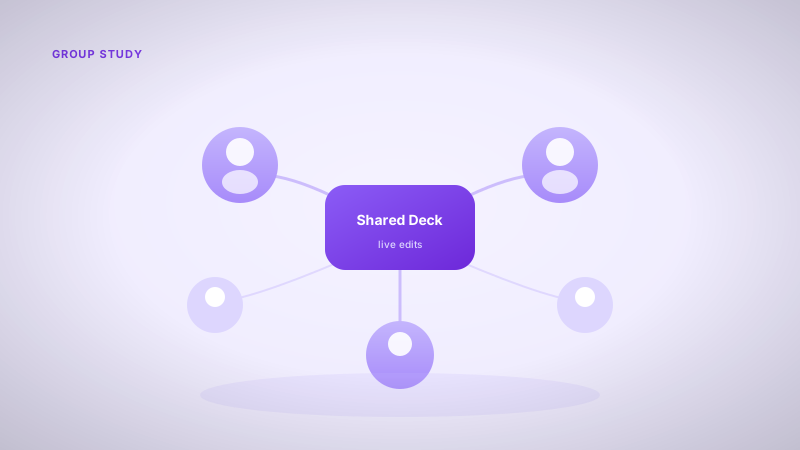
One shared deck. Everyone edits the same cards. Everyone reviews on their own time with their own FSRS schedule.
You share content. You don't share when each person is due.
Why Anki exports fail most undergrad groups
Anki is built solo-first.
- Person A exports
orgo_week4.apkg - Person B imports, fixes 12 cards locally
- Person B exports
orgo_week4_FIXED.apkg - Person C already studied the old file and doesn't know B changed cards 18–24
AnkiHub solves this for massive community decks (AnKing). Med students use it heavily. It's ~$6/mo and still inside Anki's solo workflow. Different problem than three classmates splitting edits on this week's slides.
The workflow we used (orgo study group)
Monday: one person uploads
Whoever gets to the PDF first uploads to Create → Generate, drops the draft in the shared folder. Everyone gets notified.
Don't wait for perfect cards. Draft is enough.
Monday evening: split editing (~20 min total)
| Person | Task |
|---|---|
| A | Fix metabolism cards |
| B | Fix mechanism cards |
| C | Delete duplicates, kill vague questions |
Nobody types 80 cards alone. Twenty minutes split three ways beats two hours solo.
Tue–Sun: everyone reviews solo (15 min/day)
Bus, lunch, before bed. Each person's FSRS queue is independent. Same cards, different schedules based on what each person missed.
Ongoing: fix in the deck, not just the chat
"Card 42 Krebs step is wrong" → one person edits in the shared folder → everyone's next review is correct.
Chat messages about typos get lost. Deck edits persist.
What not to do
Three decks for one lecture. Triple work. Guaranteed drift.
Email deck_FINAL_v3.apkg. Someone will study the wrong version. Always.
One person reviews while others coast. Group only works if everyone hits their daily queue. Otherwise you're editing cards for people who won't use them.
Share review schedules. You can't. And you shouldn't. FSRS is per-person.
Tool comparison for groups
| Tool | Group workflow | Gotcha |
|---|---|---|
| Nebulearn | Live shared folders, free tier | Team must agree on one folder |
| Quizlet | Share set link | Static; edits don't always sync cleanly |
| Knowt | Mostly solo | Limited sharing |
| Anki | .apkg export/import | Version chaos |
| AnkiHub | Paid sync for big community decks | Med school scale, not weekly PDF edits |
| RemNote | Share documents | High learning curve; not built for quick group PDF decks |
When group flashcards aren't worth it
Solo elective with no shared material. Everyone already has different notes. Group size >5 without someone coordinating edits (chaos scales).
When it works: 2–4 people, same lecture PDF, same midterm, willing to split 20 min of editing and 15 min/day of review.
I work on Nebulearn. This workflow is what I built sharing for.