Nebulearn Blog
Study smarter with AI flashcards
Honest app comparisons, flashcard technique that actually works, FSRS explainers, and the mistakes I made so you don't have to. Written for other students who are also cramming at 1am.
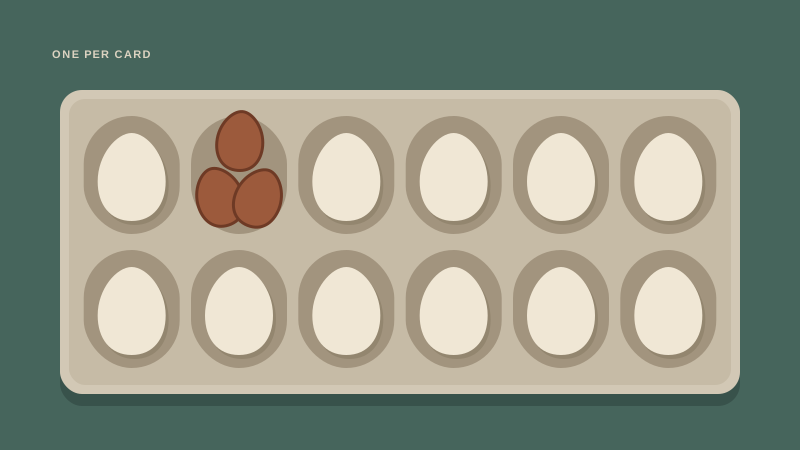
The Atomic Encoding Rule: Why your 5-line flashcards are failing
Learn why short flashcards beat long ones and how to use the Atomic Encoding rule to fix your study queue.
Read article →
The 'Time-Per-Card' Metric: How fast should you actually be?
Staring at a flashcard for a minute isn't studying, it is re-reading. Learn the 8-second rule for flashcard review speed and how to fix a slow queue.
Read article →
Quizlet vs. Anki vs. Nebulearn: The 'Setup Time' Tax
How much time do you actually spend configuring your study apps? We compare the minutes to the first card for Anki, Quizlet, and Nebulearn.
Read article →
MCAT Biology: Stop using Image Occlusion for everything
Why occluding labels on a kidney diagram fails to teach the if-then logic required for the MCAT and how to fix your biology cards.
Read article →
The Minimum Viable Study Day for when you're burnt out
How to define the floor of your study routine to prevent a total forgetting curve collapse during low-energy weeks.
Read article →
Nursing Pharmacology: Why your drug cards are 3x too long
How the nursing brain dump mistake leads to burnout and how atomic encoding fixes your pharmacology flashcards.
Read article →
Can you use Quizlet for the MCAT? (The 500-card limit)
Quizlet is great for a Friday vocab quiz, but high-stakes exams like the MCAT or USMLE break the 'Learn' session model. Here is why medical students move to SRS.
Read article →
Retrieval Practice is not 'Testing': The Pre-Study Flashcard Strategy
Why seeing a flashcard before you know the answer actually makes the lecture stick better. Learn how to use the pre-testing effect for faster learning.
Read article →
The Sunday Reset for Flashcards: Prepping your week
A specific 60-minute Sunday routine to batch card creation so you never have to make cards during your high-energy study blocks.
Read article →
Why you stop studying after 3 days (and how to fix the 'Honeymoon' crash)
Spaced repetition is the most effective way to learn, yet most students quit within a week. Here is why the 'Honeymoon' phase fails and how to fix your card creation debt.
Read article →
How to study Anatomy without 1,000 Image Occlusions
Anatomy flashcards often lead to review burnout. Learn how to group muscles, nerves, and diagrams into a queue you can actually finish.
Read article →
The MCAT/LSAT 'Review or Die' schedule
A 12-week countdown template to manage a 3,000-card deck without letting review debt crush your practice exam scores.
Read article →
The 'Card-Split' Method: How to divide flashcards with a partner
How to share the load of making flashcards without creating an encoding gap. Learn the Lecture-Topic split and the Review and Edit rule.
Read article →
Turning a 50-slide lecture into 20 cards
How to find the right ratio of lecture slides to flashcards so you don't drown in your review queue.
Read article →
Pharmacology flashcards that don't kill your clinical hours
How to structure nursing pharmacology cards using the Mechanism of Action vs Side Effect split to stop card bloat.
Read article →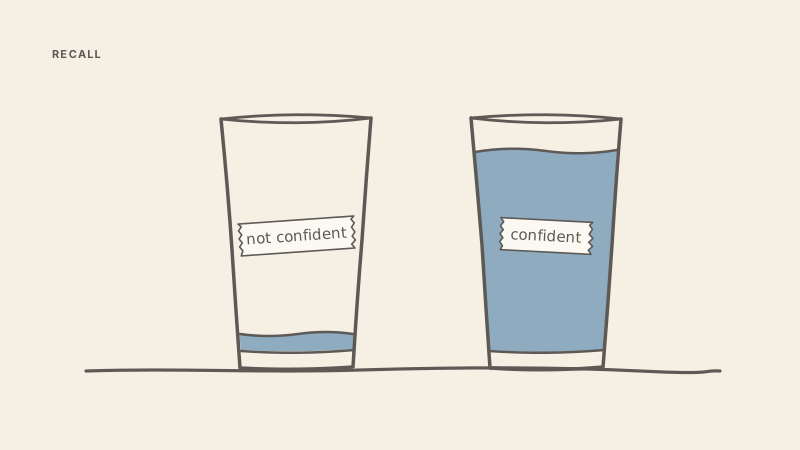
Why you feel like you're 'faking' your flashcard reviews
Flashcards only work if you are actually performing active recall. Learn how to spot the difference between recognition and recall to stop faking your reviews.
Read article →
How to manage a shared flashcard deck for a study group
Sharing flashcards with classmates often leads to a messy deck of duplicates and errors. Here is how to structure a collaborative study group that actually saves time.
Read article →
The 'Review-Only' Day: Staying consistent when you're burnt out
How to maintain a study streak without the burnout. A maintenance protocol for freezing new cards and protecting your long-term memory.
Read article →
The AnKing Effect: When premade flashcard decks actually work
Premade decks like AnKing are gold for standardized exams, but they often fail for university lectures. Learn when to download and when to create.
Read article →
The Zero-Inbox Study Method: Using your due list as a productivity tool
Stop wasting time planning your study sessions. Learn how to treat your flashcard due list as the single source of truth for your academic progress.
Read article →
When medical school should still use Anki
Anki is the gold standard for USMLE prep, but it is not always the best tool for this week's lecture. Here is when to keep Anki and when to switch.
Read article →
The Quizlet to PDF Guide: How to print your sets for analog study
Learn how to export your Quizlet sets to PDF or paper. We cover print layouts, formatting for physical cards, and why analog study might beat the app.
Read article →
Encoding complex diagrams without Image Occlusion
Image occlusion is great for anatomy, but it can fail for logic. Learn why describing diagrams in text leads to better long-term retention.
Read article →
How to export Quizlet to Anki (and why your progress won't follow)
A technical guide on moving Quizlet sets to Anki using add-ons or CSVs, and why your 'Mastery' progress cannot be transferred.
Read article →
How to move your Quizlet sets to a real Spaced Repetition app
A guide on exporting Quizlet sets as CSV or text and importing them into SRS apps like Anki or Nebulearn without losing your data.
Read article →
Why you shouldn't clear your flashcard deck every day
The zero inbox mentality leads to burnout in spaced repetition. Learn why hitting 0 cards due every day can actually hurt your long-term memory.
Read article →
Spaced repetition for CS and coding interviews
How to use spaced repetition for computer science to master algorithms, syntax, and systems without burning out on LeetCode.
Read article →
Language learning without living in Anki
Anki is the gold standard for vocab, but the setup cost is high. Here is how to choose an alternative for language learning if you bounced off the configuration.
Read article →
The Nursing Student's Guide to Spaced Repetition
Nursing school is a firehose of drug names, lab values, and care plans. Here is how to use spaced repetition to keep it all straight without burning out.
Read article →
The 'Easy' Button is a Lie: How to Fix Your Review Speed
Why hitting Easy on your flashcards actually makes you study more in the long run and how to find your ideal average time per review.
Read article →
The 'Context-Free' Test: Why you only remember cards in order
Feeling like a genius in your flashcard app but failing the exam? You might be falling for the serial position effect and the next-card hint trap.
Read article →
The 3-day 'Audit' for high-stakes exam decks
How to clean up a shared Anki deck that is too big for your exam window by deleting low-yield cards.
Read article →
The 15-minute flashcard wall: Why long study sessions fail
Why flashcard sessions have diminishing returns and how decision fatigue leads to 'Easy' button abuse after the 15-minute mark.
Read article →
Is Anki still worth it in 2026?
Anki is still the king of medical school and long-term retention, but its time cost for new material has never been higher. Here is when to use it and when to switch.
Read article →
Premade Anki Decks vs Making Your Own: Which Saves More Time?
Choosing between downloading a deck like AnKing and building your own flashcards depends on your syllabus. Here is when to use each and how to bridge the gap.
Read article →
Why Quizlet Classes Feel Like Progress (But Aren't)
Quizlet Classes are great for distributing content, but they aren't a study plan. Learn the difference between a shared folder and a real spaced repetition due list.
Read article →
The 5-minute Quizlet exit strategy
How to move your Quizlet sets to another app without losing your study momentum or wrestling with CSV exports.
Read article →
Why your Quizlet 'Mastery' is lying to you
Quizlet Mastery measures how well you know a card right now, not if you'll remember it for the exam. Learn why 100% Mastery often leads to failing grades.
Read article →
Why your 'Study Streak' is actually making you burn out
Gamification makes for great marketing, but the pressure of a 100-day streak often leads to low-quality reviews and eventual burnout. Here is how to fix it.
Read article →
Why you shouldn't use your friend's flashcards
Downloading a shared deck feels like a shortcut, but it often leads to slower learning. Here is why making your own cards is actually the faster path.
Read article →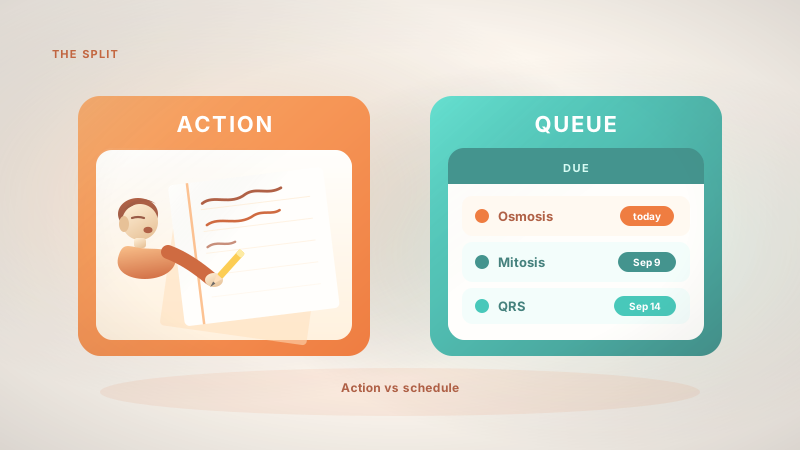
Active recall vs spaced repetition
Active recall and spaced repetition are often used interchangeably, but they do different jobs. Here is how to use both to actually remember what you study.
Read article →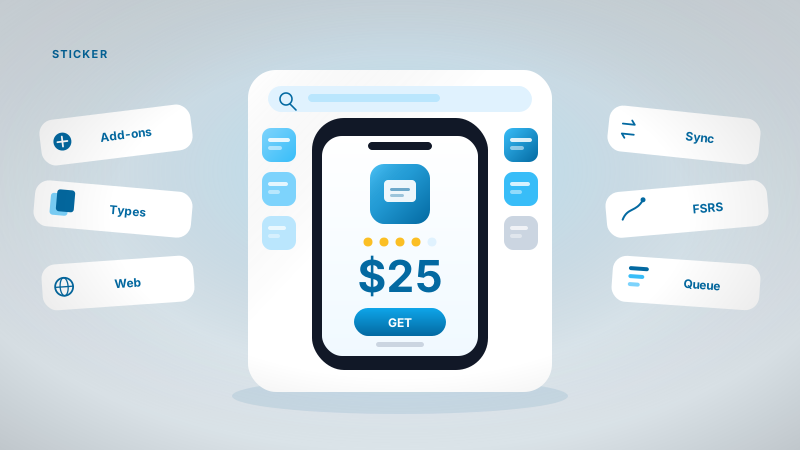
Anki on iPhone costs $25. What that actually buys
Anki is free on Android and desktop, but costs $24.99 on iOS. I break down the one-time cost vs subscriptions and who should actually pay for it.
Read article →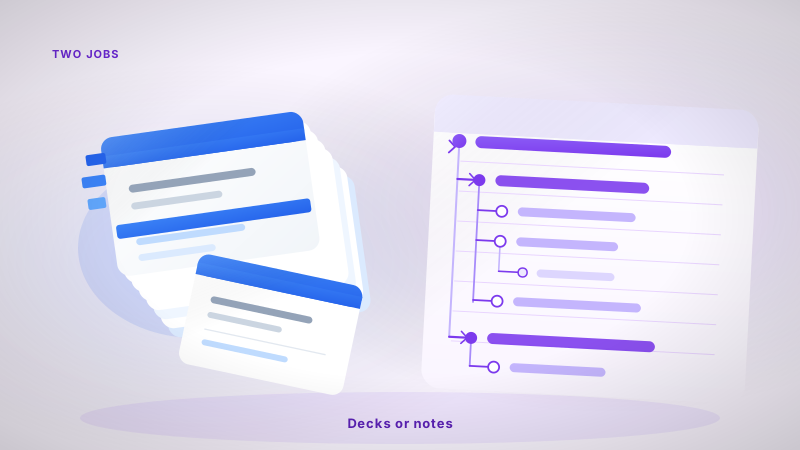
Anki vs RemNote: Notes App or Flashcard App
Choosing between Anki and RemNote depends on whether you need a database of flashcards or a network of connected notes.
Read article →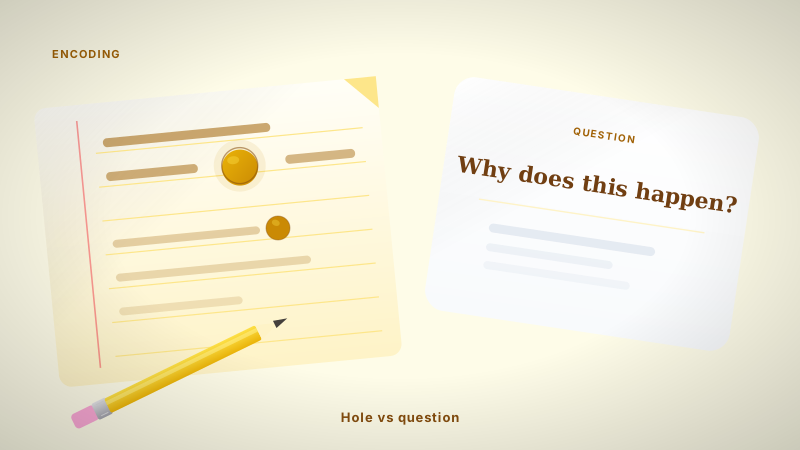
Why you should stop using 'Cloze Deletion' for complex concepts
Cloze deletion is fast to create but often leads to pattern matching. Learn why Q&A encoding is better for understanding logic and engineering principles.
Read article →
The Consistency Fallacy: Why 4-Hour Study Sessions Kill Your Streak
High-intensity study sessions often lead to burnout and broken streaks. Learn why setting a ceiling on your flashcard reviews is the key to long-term consistency.
Read article →
Flashcard 'Maintenance Time': The hidden tax of spaced repetition
Spaced repetition is efficient, but tagging, formatting, and card creation can eat the week. Here is how to cut the admin tax.
Read article →
Is Quizlet Plus Worth It for Spaced Repetition?
Quizlet Plus costs roughly $35 a year. I look at whether the new Memory Score and AI features actually replace a real spaced repetition system.
Read article →
The 'Question-First' Note Taking Method
Stop writing notes you have to re-read. Learn how to take notes for flashcards by writing the prompts during the lecture to avoid storage debt.
Read article →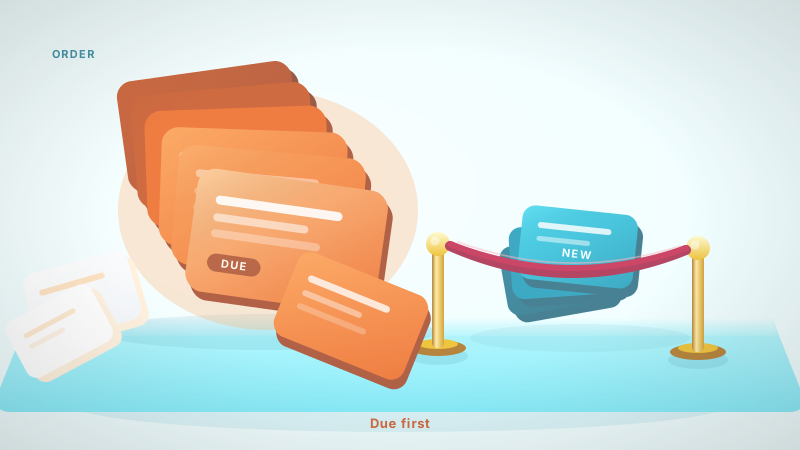
The 'Review-First' Rule: Why your new cards are killing your retention
Doing new cards before your daily reviews is a dopamine trap. Learn why the review-first mandate is the only way to maintain a long-term memory queue.
Read article →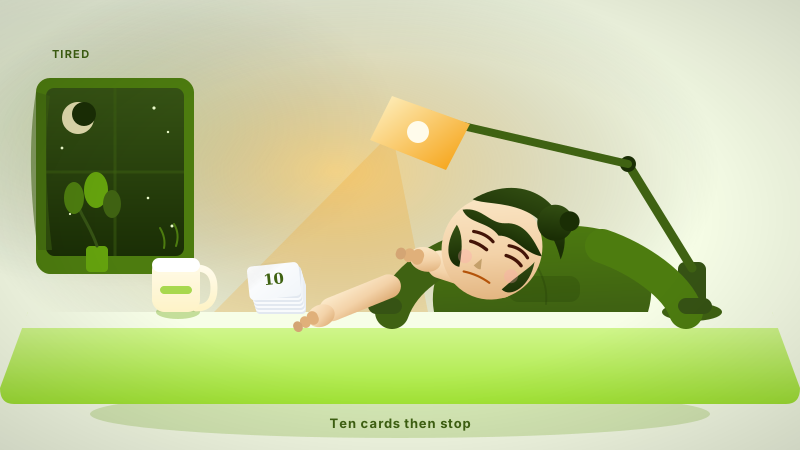
The 'Passive-to-Active' Ladder: Studying when your brain is fried
A tiered protocol for studying while exhausted. Learn how to stay productive without hitting a mental block by matching your tasks to your cognitive energy.
Read article →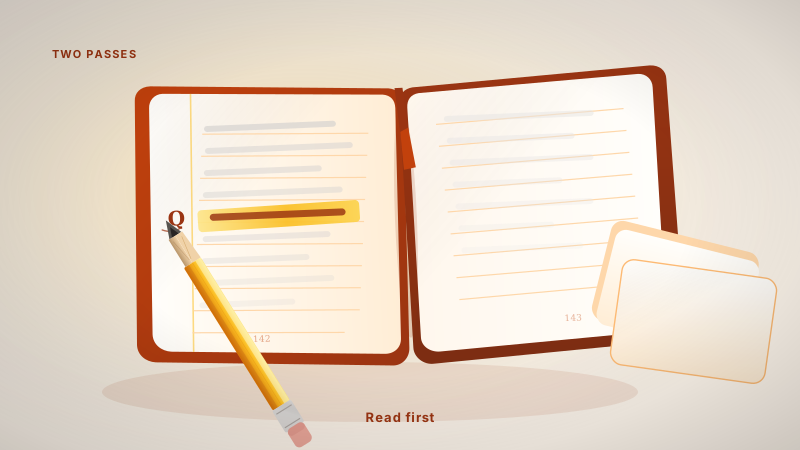
Why you shouldn't make flashcards while reading
Making flashcards while reading a textbook for the first time creates fragmented cards and breaks your cognitive flow. Learn why a two-pass system works better.
Read article →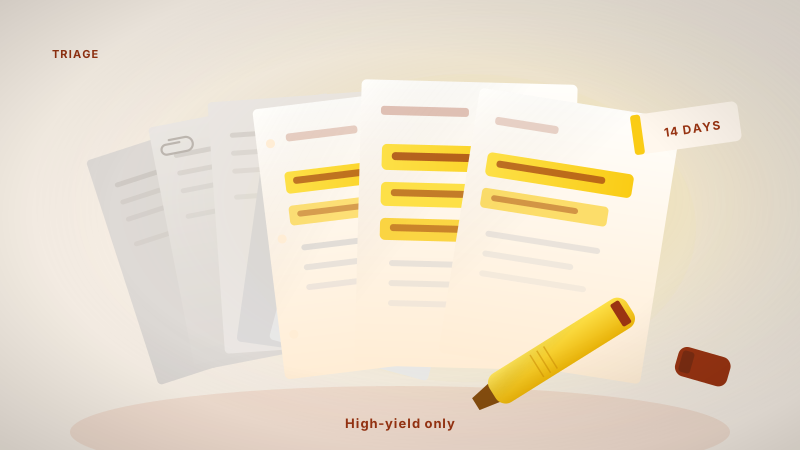
How to study for finals in 2 weeks (without the 12-hour days)
A triage guide for engineering-level finals. How to pick what to study, what to skip, and how to pass when you are behind on your lecture slides.
Read article →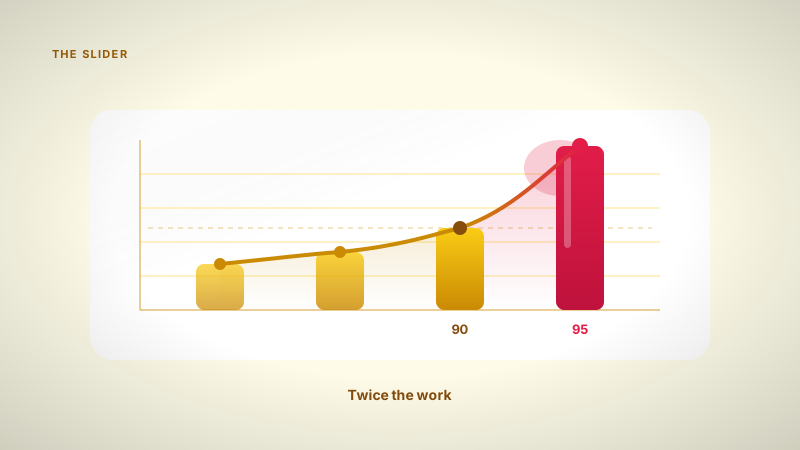
Is a 95% retention rate worth the extra study time?
Pushing your Anki or FSRS retention from 90% to 95% feels better, but it can double your daily workload. I break down the math of diminishing returns.
Read article →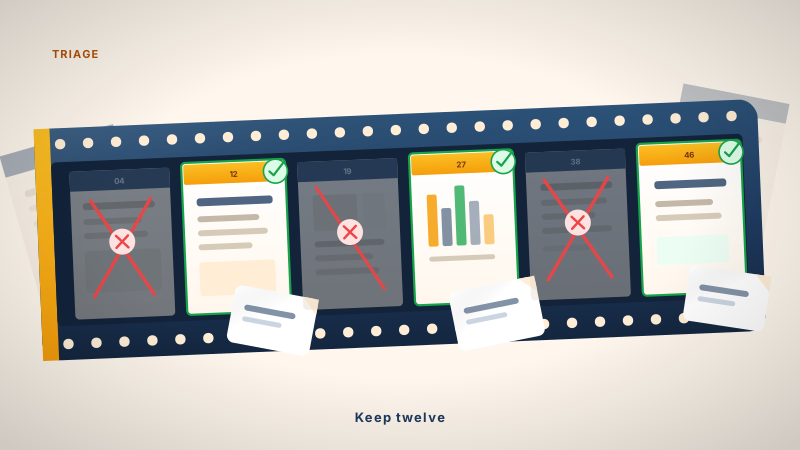
The 50-Slide Lecture Triage: What to card and what to cut
How to make flashcards from lecture slides fast without drowning in low-yield cards. An engineering student's guide to lecture triage.
Read article →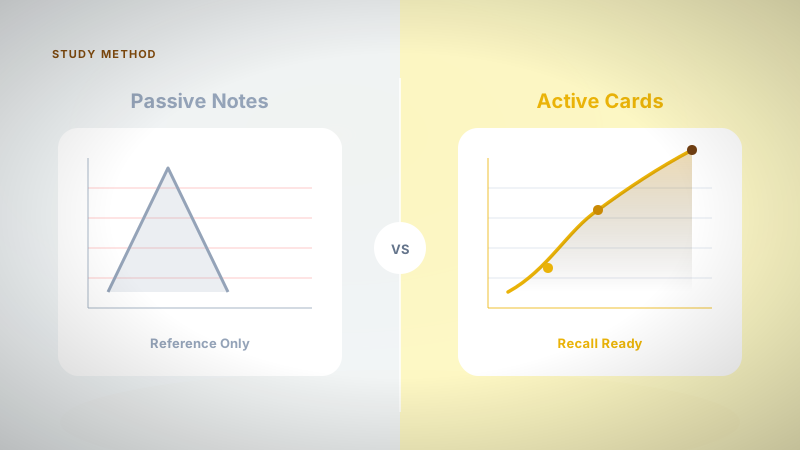
Notes vs. Cards: The 'Encoding Gap' that wastes your study time
Why taking notes feels productive but often fails at exam time, and how to bridge the gap between reference material and active recall.
Read article →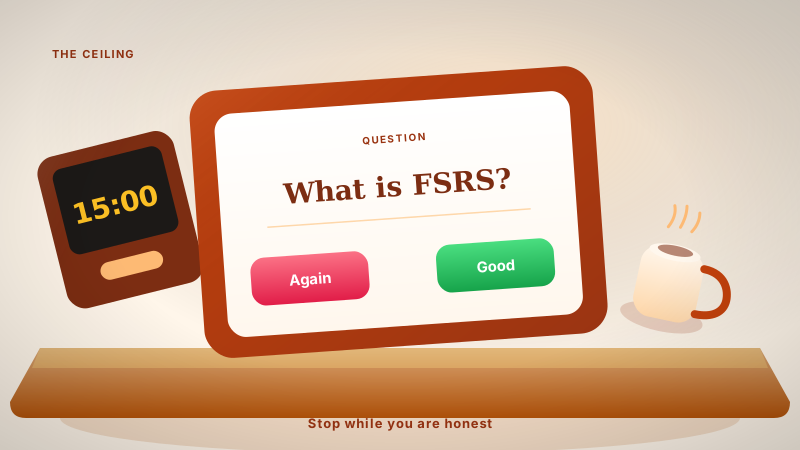
The 15-minute flashcard ceiling: Why long sessions fail
Why flashcard sessions are more draining than reading and how to use micro-sessions to stop active recall burnout.
Read article →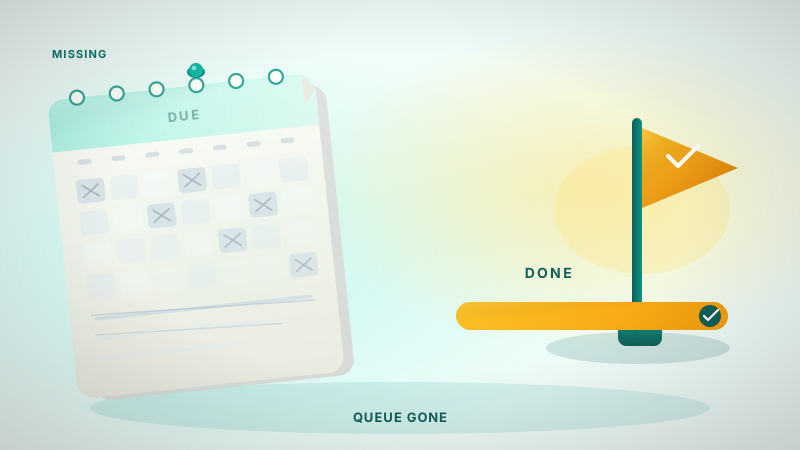
Why you can't find 'Long-Term Learning' on Quizlet anymore
Quizlet retired its Long-Term Learning mode and spaced repetition features. Here is why it disappeared and how the new 'Checkpoint' system works.
Read article →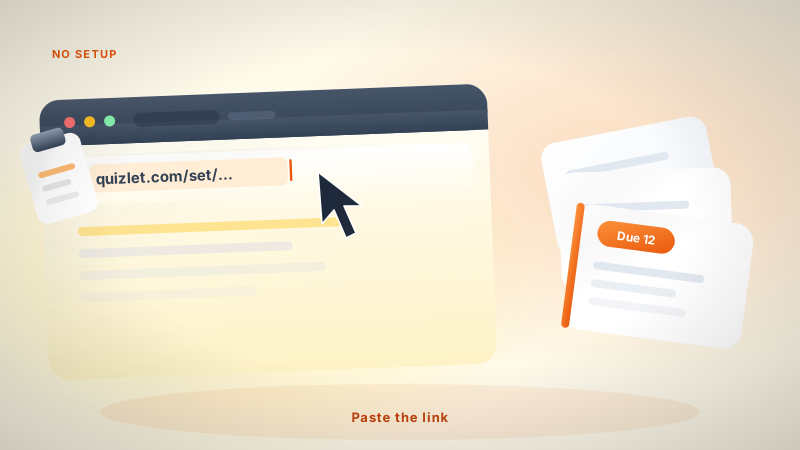
The 10-minute Quizlet to SRS transition (No technical setup)
How to move your Quizlet sets to a spaced repetition system without the friction of CSV exports or Anki configuration.
Read article →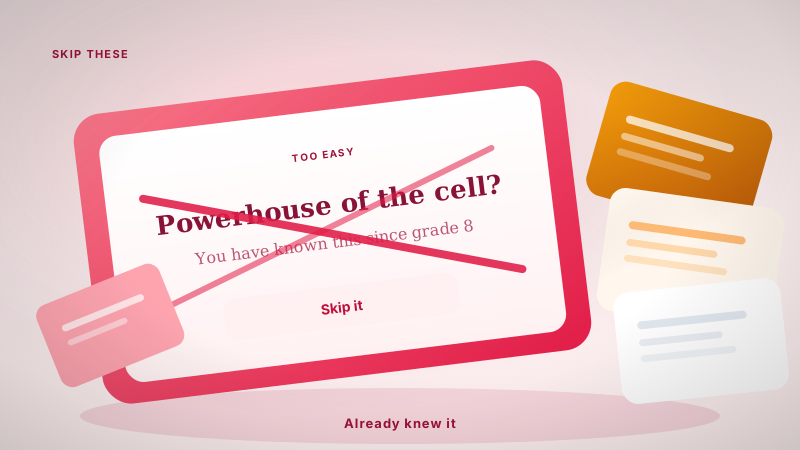
Stop making flashcards for things you already know
How many flashcards is too many? Learn how to identify card bloat and use the Common Sense filter to keep your review queue manageable.
Read article →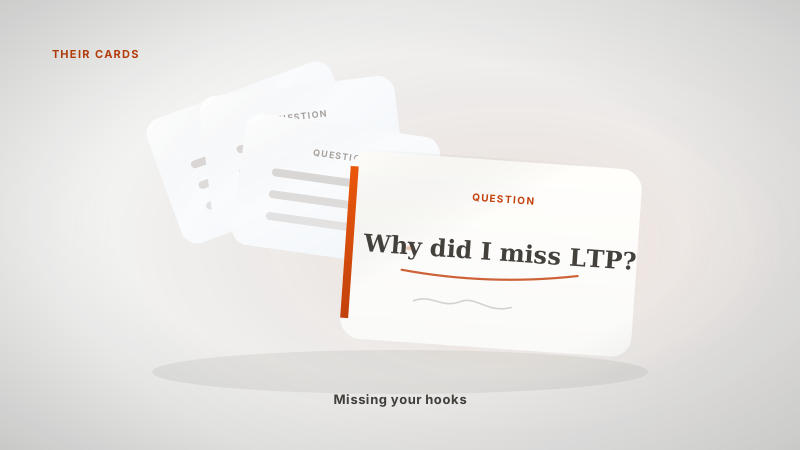
Why you shouldn't share flashcards with your study group
Shared flashcard decks often lead to poor retention and high frustration. Discover the 'Encoding Gap' and why making your own cards is 50% of the learning.
Read article →
Why your Anki queue is 400 cards
Your Anki review backlog isn't just a motivation problem. It is usually a math problem involving new cards, ease hell, and your scheduler settings.
Read article →
The 'Blank Sheet' Retrieval Method: What to do before you open your deck
Flashcards are great for memorizing facts, but they often hide how concepts connect. Learn the blank sheet method to build a mental map before you drill the atoms.
Read article →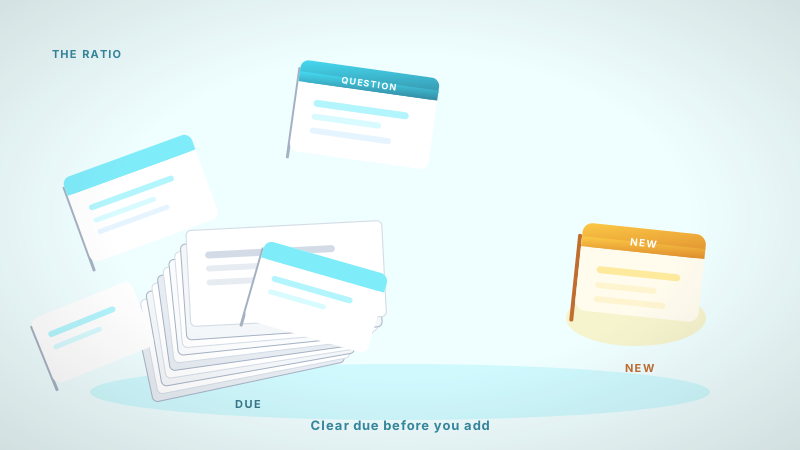
What to do when your due pile is bigger than your new cards
How to fix a review backlog and find the right balance between new flashcards and daily reviews.
Read article →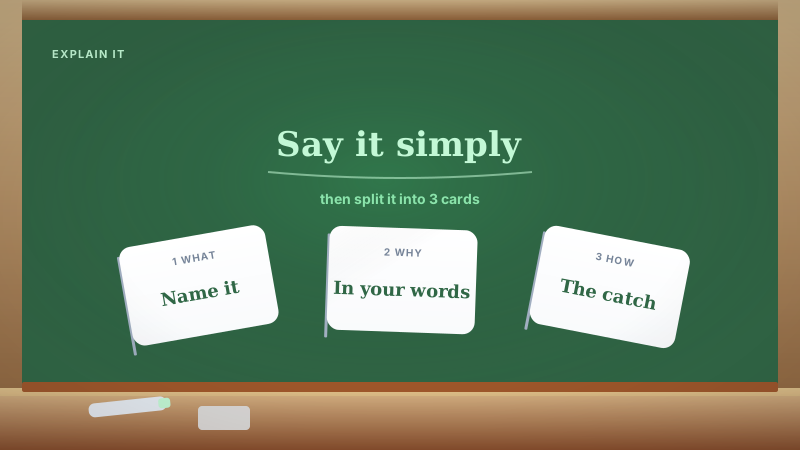
The 'Feynman' Flashcard: Encoding for Deep Understanding
Most people use the Feynman technique on paper. Here is how to break a teaching explanation into a 3-card sequence that actually fits in a due list.
Read article →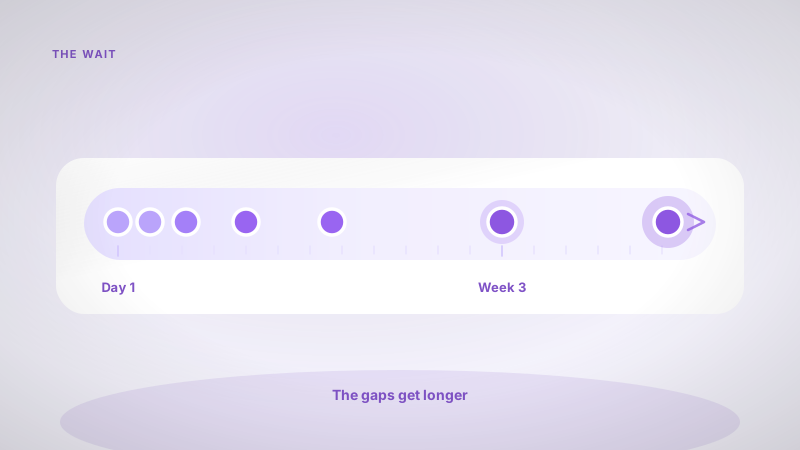
How long until spaced repetition actually works
Spaced repetition is not a magic bullet for tomorrow's exam. Learn the timeline for when the method starts saving you time and how to recognize the shift.
Read article →
How to study when you have no motivation
Why willpower is a bad strategy for heavy workloads and how to use a due list to automate your study sessions.
Read article →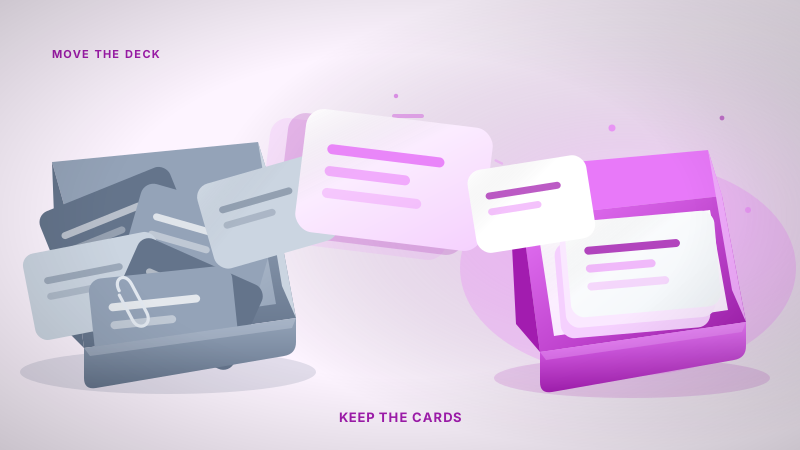
How to leave Anki without retyping your decks
A guide on moving your flashcards out of Anki, what actually transfers in an .apkg file, and why your review history stays behind.
Read article →
How to write a flashcard that sticks
Stop failing your cards. Learn the minimum information principle, how to use cloze deletions, and why you must delete junk AI cards.
Read article →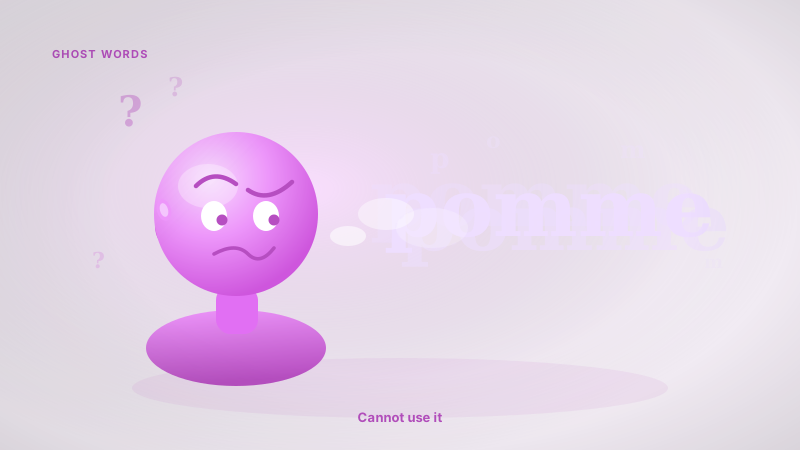
Language Learning: The 'Ghost Word' Problem in Pre-made Decks
Why 1,000 flashcards in a pre-made Anki deck don't equal fluency, and how context-free cards create 'Ghost Words' you can't actually hear.
Read article →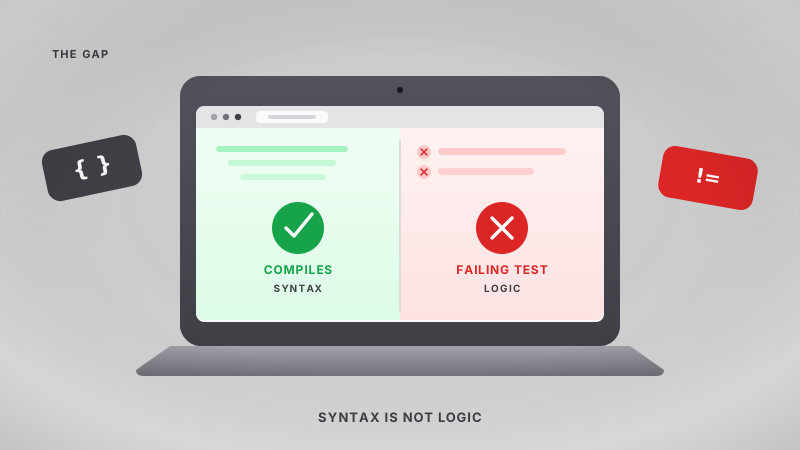
Coding Syntax vs. Logic: Why Your LeetCode Cards Feel 'Easy' but You Still Fail Interviews
Why memorizing code snippets leads to the Syntax Illusion and how to use spaced repetition to master algorithm logic instead.
Read article →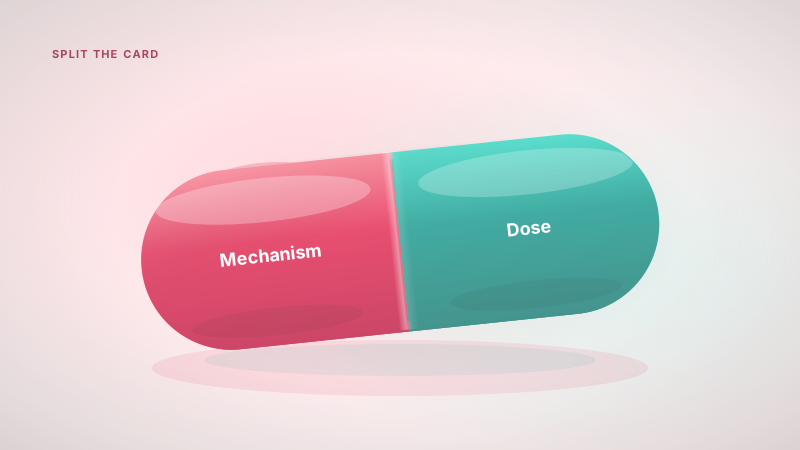
Nursing Pharmacology: The 'Mechanism vs. Dose' Encoding Split
Why memorizing drug doses before mechanisms leads to clinical failure, and how to structure your nursing pharmacology flashcards for safety.
Read article →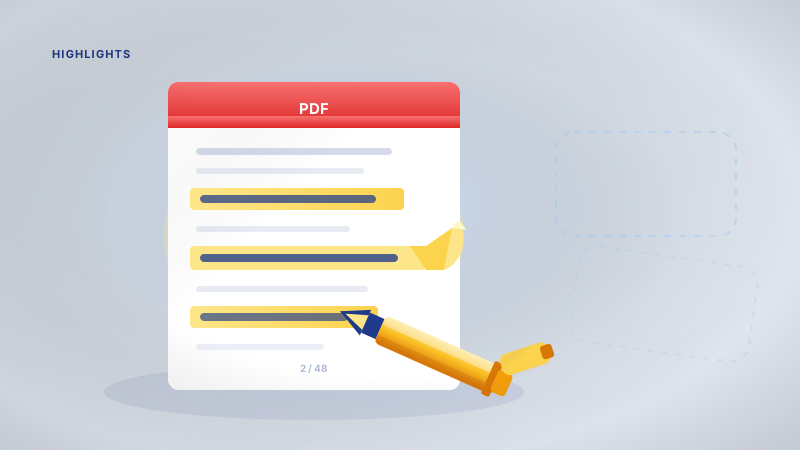
The 'Question-Answer' Gap: Why your PDF highlights make terrible flashcards
Highlighting a PDF feels like progress, but it creates a recognition trap. Learn why converting highlights to flashcards requires a cognitive shift from facts to challenges.
Read article →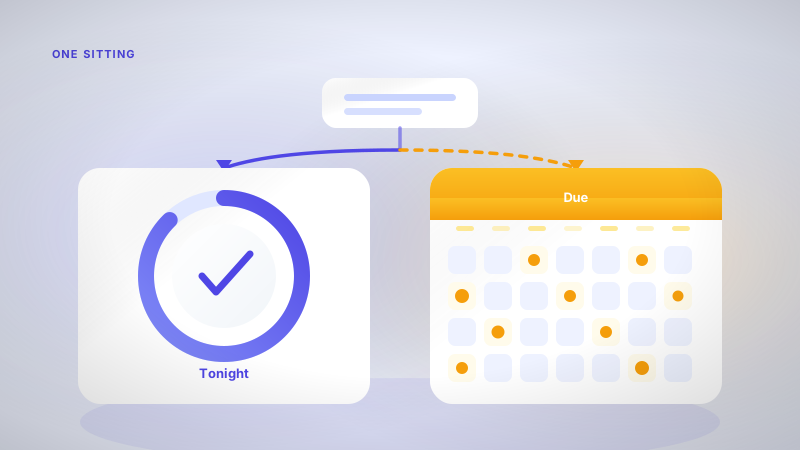
Why Quizlet 'Learn' feels like it's working (but isn't)
Quizlet Learn mode is great for cramming, but it isn't true spaced repetition. Here is the difference between session-based mastery and a real schedule.
Read article →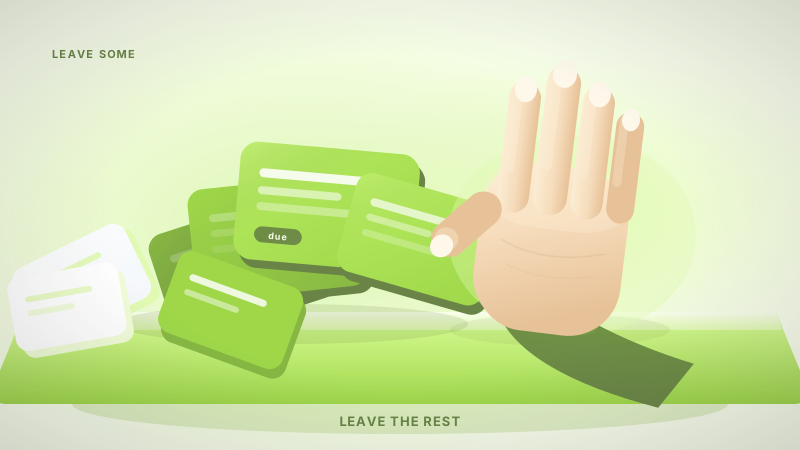
Sustainable SRS: Why you should stop trying to 'Finish' your cards
The zero-inbox mentality is a trap for flashcards. Learn why clearing your due pile every day leads to burnout and how to use a time-capped approach instead.
Read article →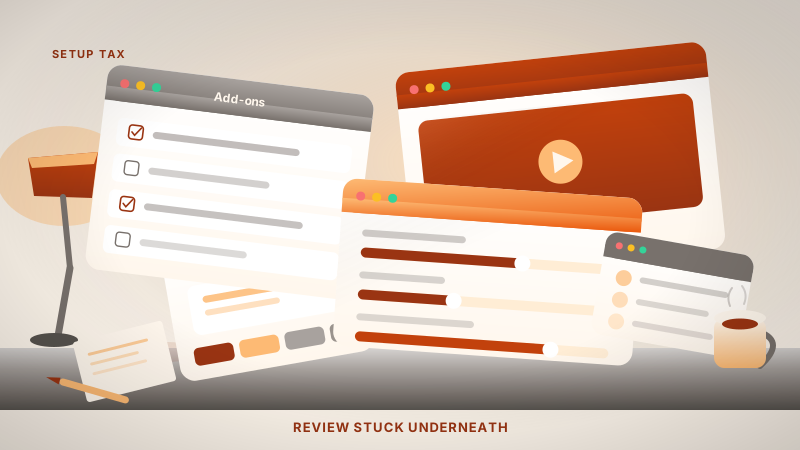
The hidden costs of Anki
Why the gold standard of spaced repetition might be costing you more time than it saves.
Read article →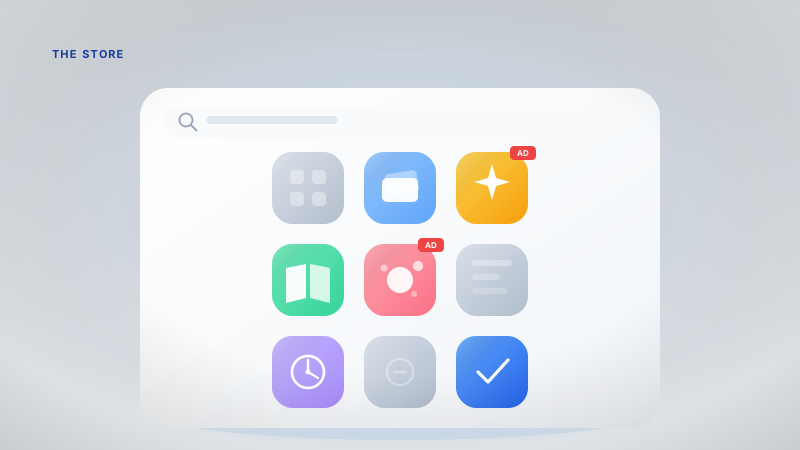
What study apps are actually good? The truth about corporate business apps, enshittification, and which study apps are worth your time
Most study apps eventually turn the student into the product. Here is how to spot apps that actually help you learn versus apps that just want to show you ads.
Read article →
Where Anki actually spends your time
Anki is the gold standard for long-term memory, but it has a high entry cost. I look at where the hours go in the first week versus the first semester.
Read article →
Why your PDF-to-Flashcard AI cards are failing
AI flashcard generators often create cards that are too easy to answer, leading to false mastery. Learn how to fix your AI cards for better retention.
Read article →
Why your 'Study Streak' is a trap (and how to actually stay consistent)
Study streaks feel productive but often incentivize low-quality reviews. Learn why streaks fail and how to build a consistency model that survives real life.
Read article →
Why you can't remember what you read (and how to fix it)
Feeling like you forget a chapter the moment you close the book? I explain the illusion of competence and how to move from passive reading to active recall.
Read article →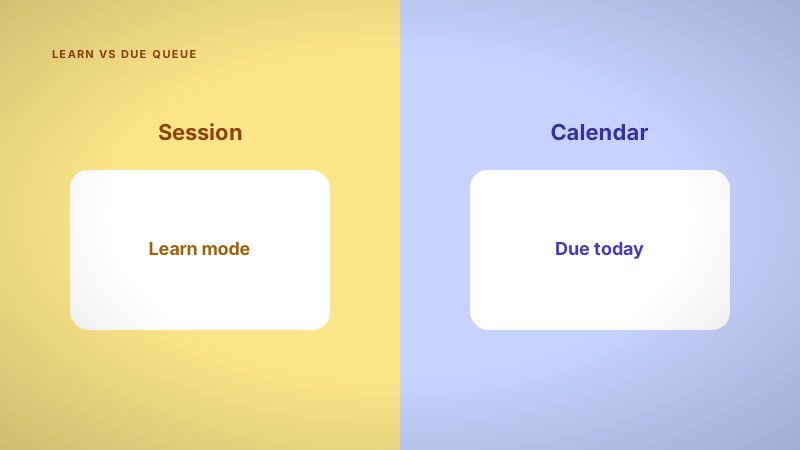
Does Quizlet Have Spaced Repetition?
Learn ranks terms in a session, not a due calendar. They retired Long-Term Learning. Plus Memory Score is paid spacing, not FSRS. When I still use it.
Read article →
Study Apps That Actually Save You the Most Time
Rank study apps by whichever step is eating your week: making cards, reviewing them, or sharing a deck. Anki, Quizlet, RemNote, Knowt, Nebulearn.
Read article →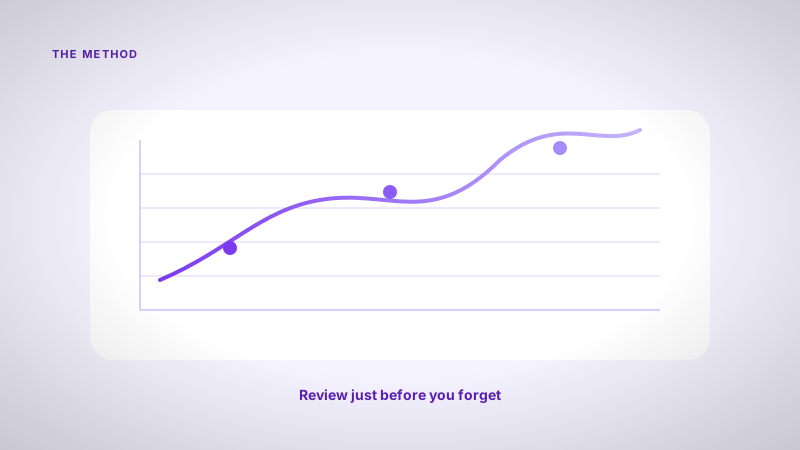
What Is Spaced Repetition? (It's a Due List, Not Flashcards)
Spaced repetition is a due list between sittings, not doing flashcards. How it differs from active recall and Quizlet Learn, without the Wikipedia history dump.
Read article →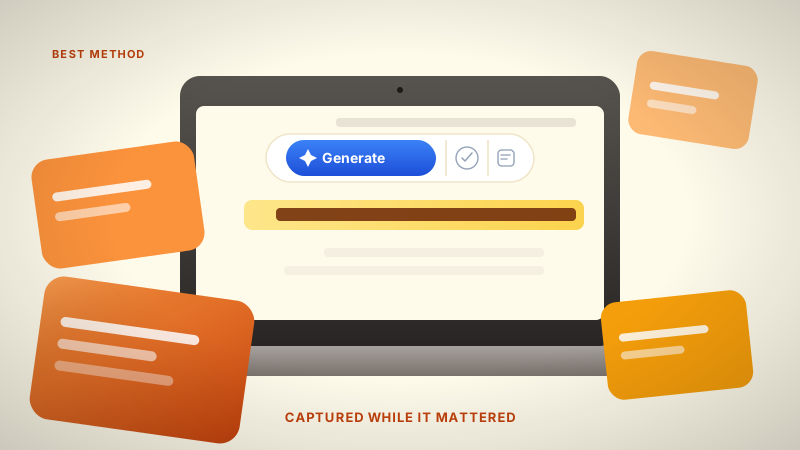
The Best Way to Make Flashcards
Why capturing flashcards the moment you read something beats batching them later, plus how to use AI profiles and keybinds without making vague cards.
Read article →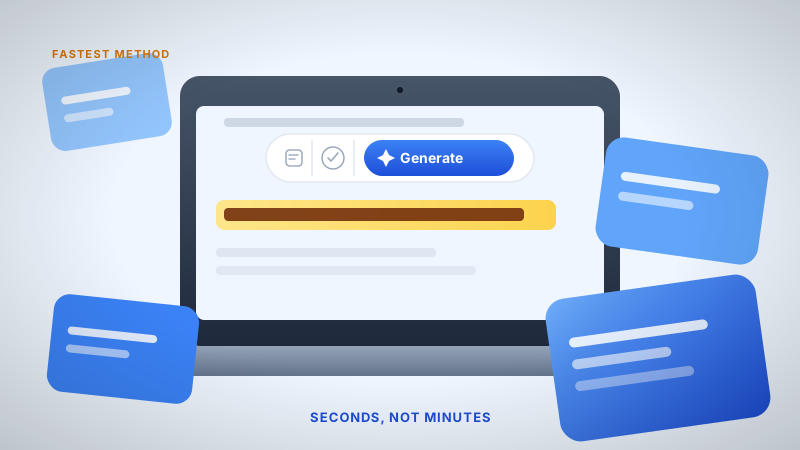
The Fastest Way to Create Flashcards
Ranking the fastest ways to actually make flashcards: browser capture while you study, AI generation for a whole chapter, and where spaced repetition fits in.
Read article →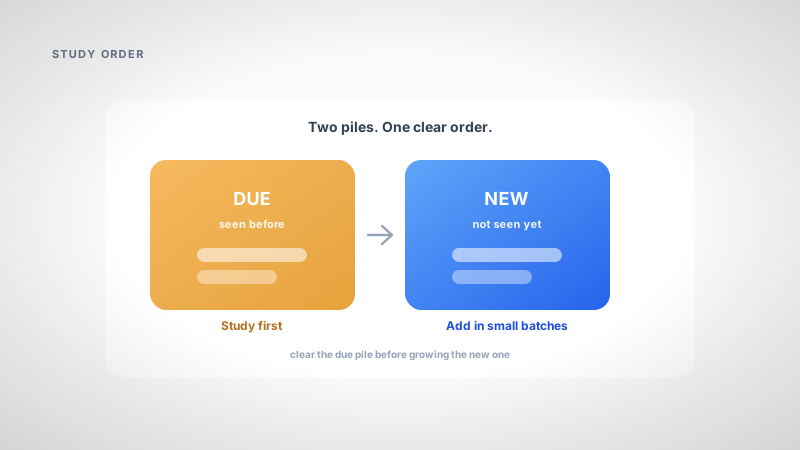
New vs Due Cards: What's the Difference, and Which Should You Study First?
A simple guide to new and due flashcards, how spaced repetition moves cards into your review cycle, and when to study each pile.
Read article →
Best AI Flashcard Apps in 2026 (Tested by a Student)
AI flashcard apps I tested on real lecture PDFs: what each outputs and when the draft is worth editing.
Read article →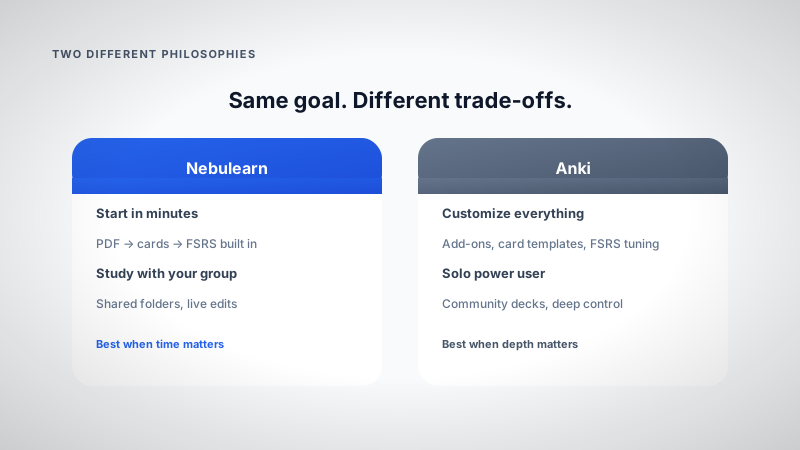
Nebulearn vs Anki: Which Should You Use in 2026?
Nebulearn vs Anki: time cost, collaboration, FSRS setup, and when each one fits.
Read article →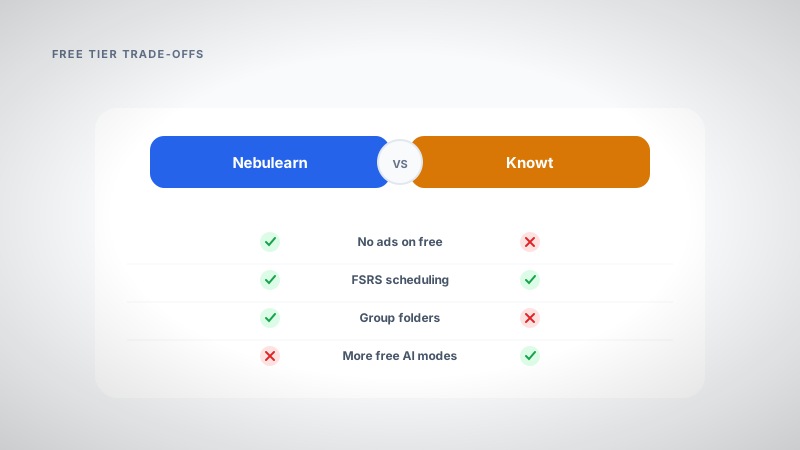
Nebulearn vs Knowt: AI Flashcards, Ads, and Pricing Compared
Nebulearn vs Knowt: I used Knowt before building Nebulearn. Ads, FSRS, collaboration, and what each costs.
Read article →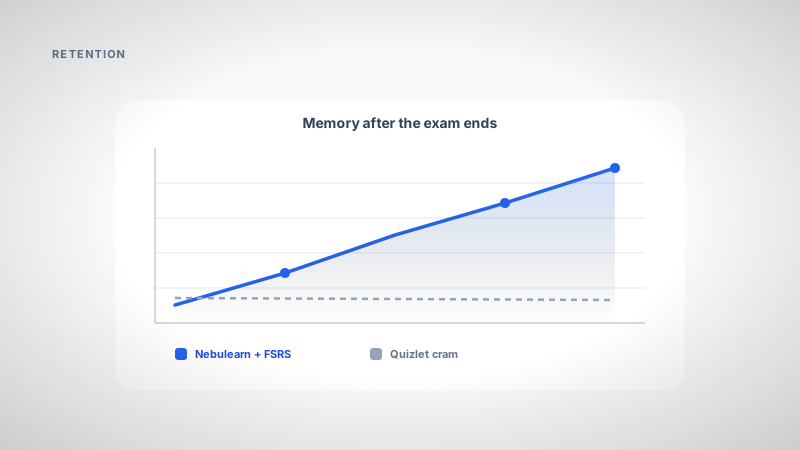
Nebulearn vs Quizlet: Which Is Better for Actually Remembering?
Nebulearn vs Quizlet: same-lecture workflow, games vs FSRS, ads, and when each app fits.
Read article →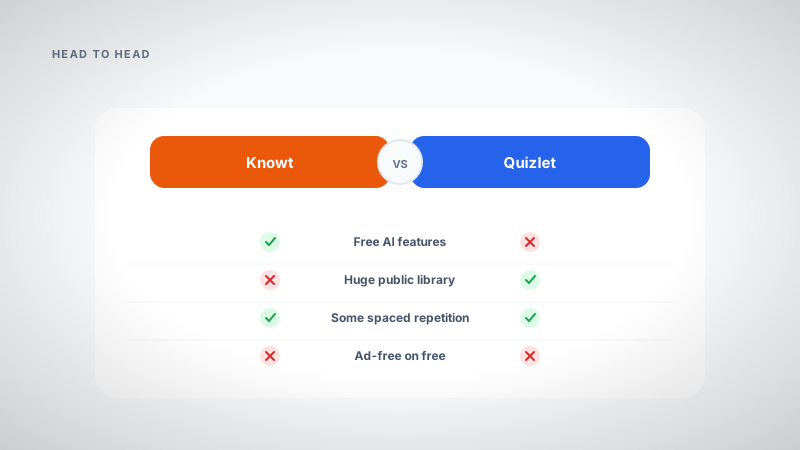
Knowt vs Quizlet in 2026: Pricing, Ads, and Which to Pick
Knowt vs Quizlet from someone who's used both: ads, games, AI, pricing, and when to look past both.
Read article →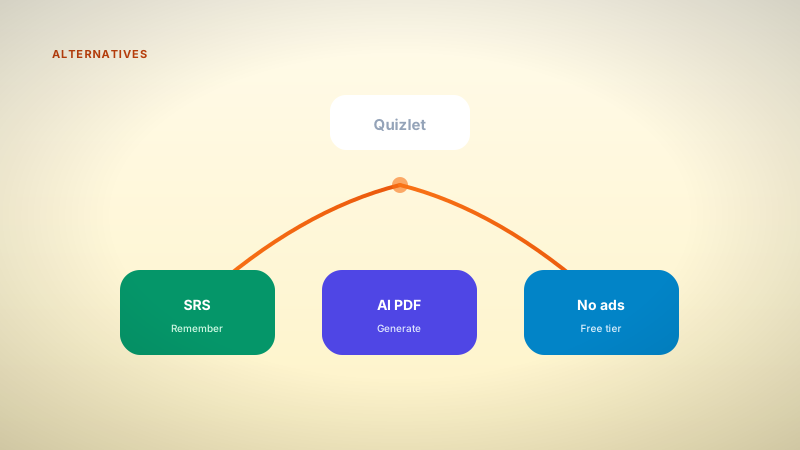
Best Quizlet Alternatives in 2026 (For Students Who Need to Remember)
Quizlet alternatives I actually tried: Anki, RemNote, Knowt, Brainscape, and when each one fits.
Read article →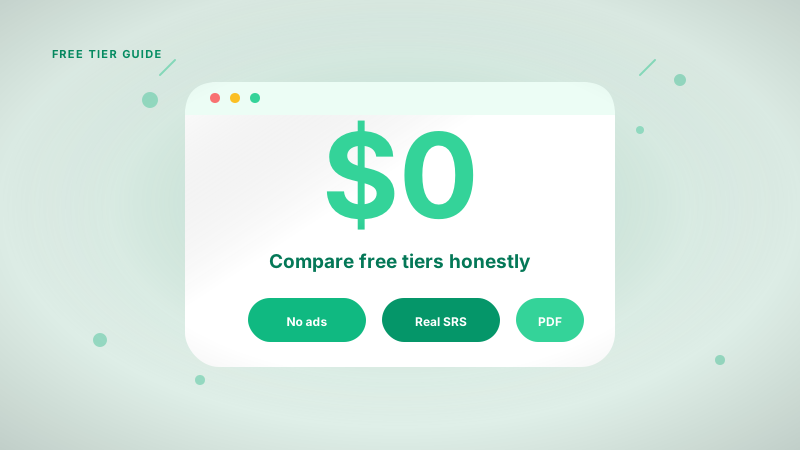
Best Free Anki Alternatives in 2026 (No BS Pricing Guide)
What's actually free: Anki, Quizlet, RemNote, Knowt, and where the hidden costs show up.
Read article →
Best Anki Alternatives in 2026 for Collaborative Studying
Anki alternatives I actually looked at: RemNote, Quizlet, Knowt, Brainscape, and when each one fits.
Read article →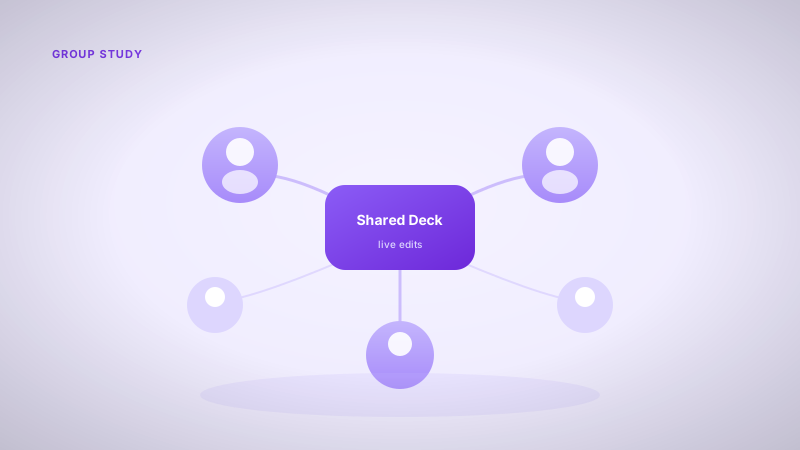
How to Study in a Group With Flashcards (Without Deck Chaos)
Group flashcard workflow — one shared deck, split editing, personal FSRS schedules, and why Anki exports break.
Read article →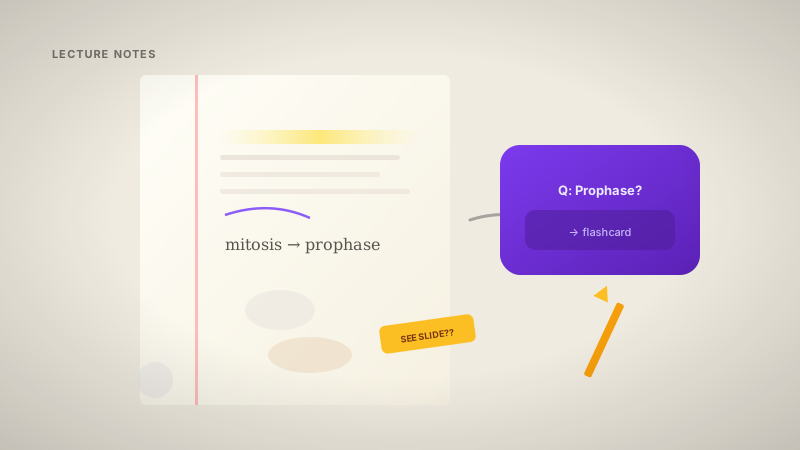
How to Make Flashcards from Lecture Notes
Turn messy lecture notes into flashcards you'll actually review: paste workflow, edit pass, tags, and tool comparison.
Read article →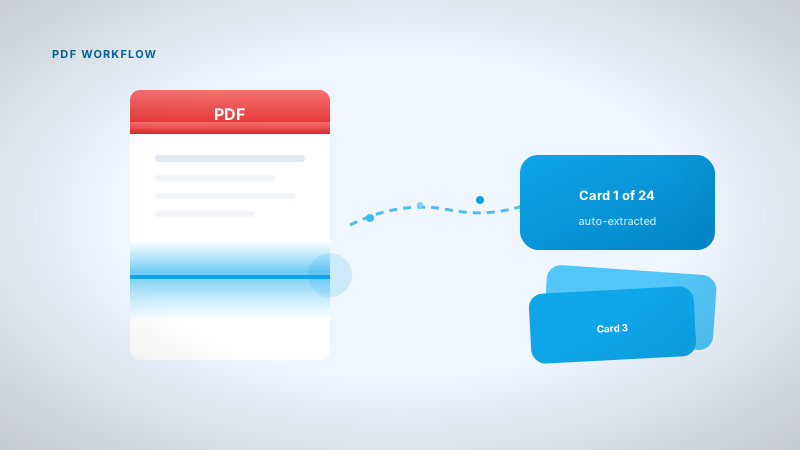
How to Make Flashcards from a PDF (Step-by-Step Guide)
PDF to flashcards workflow with realistic time estimates — scope, edit, tag, review, and how other tools compare.
Read article →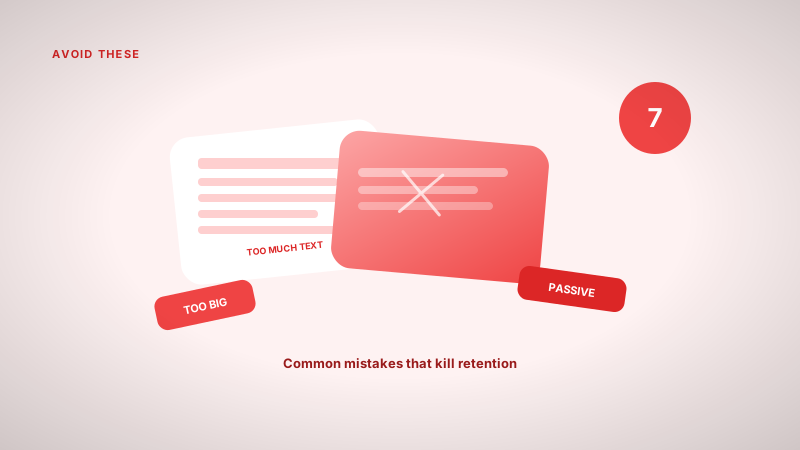
7 Flashcard Mistakes Students Make (I Made All of Them)
Common flashcard mistakes that kill retention: passive review, giant cards, skipping edits, app-hopping, and cramming the night before.
Read article →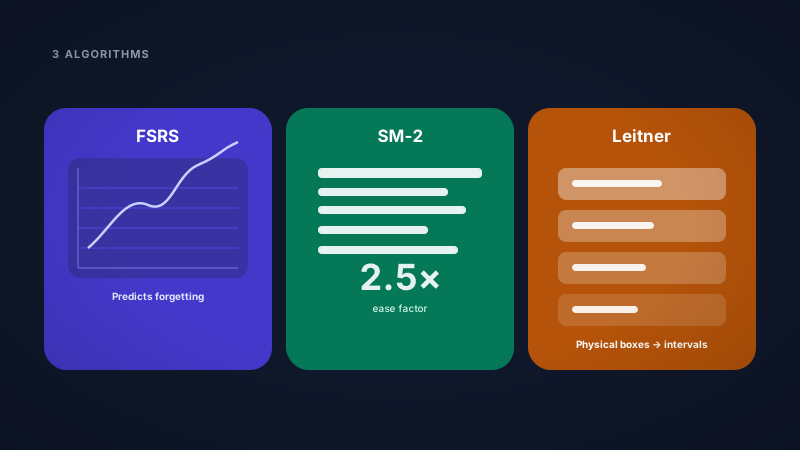
FSRS vs SM-2 vs Leitner: Which Spaced Repetition Algorithm Should You Use?
Compare FSRS, SM-2, and Leitner spaced repetition for students. How each algorithm works, when to pick each one, and how to customize them in Nebulearn.
Read article →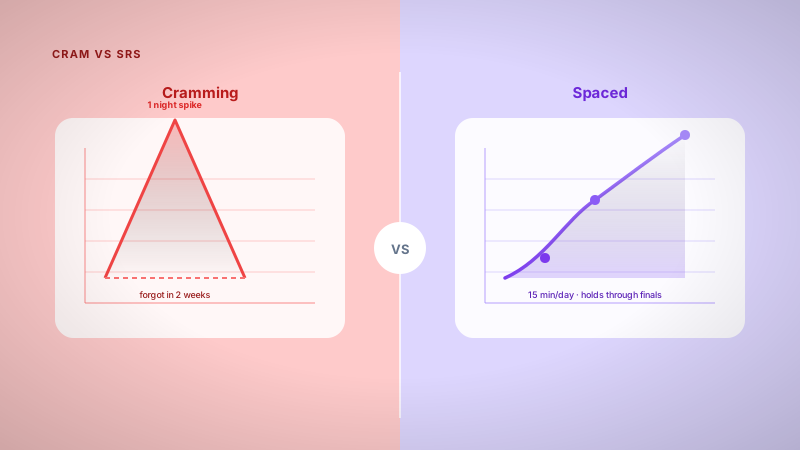
Cramming vs Spaced Repetition: Which Actually Works?
Cramming vs spaced repetition for students: retention data, when cramming is fine, when it fails, and why FSRS beats both-nighters.
Read article →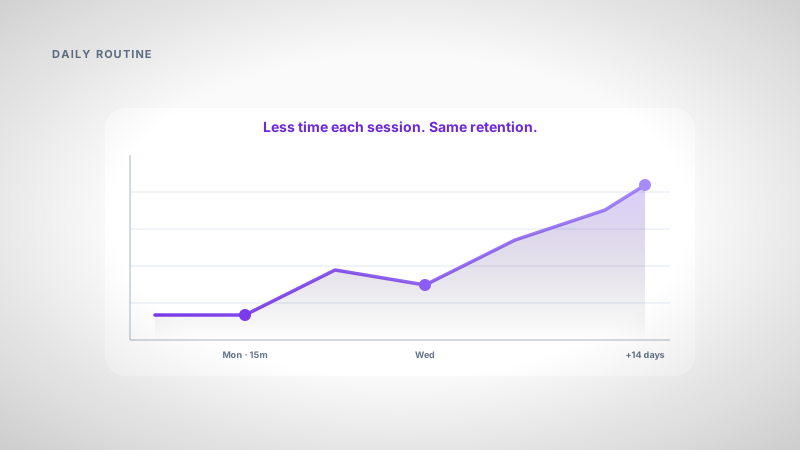
How to Study With Spaced Repetition (Without Burning Out)
Practical spaced repetition study routine for students: daily reviews, FSRS, card quality, and tools that don't eat your whole evening.
Read article →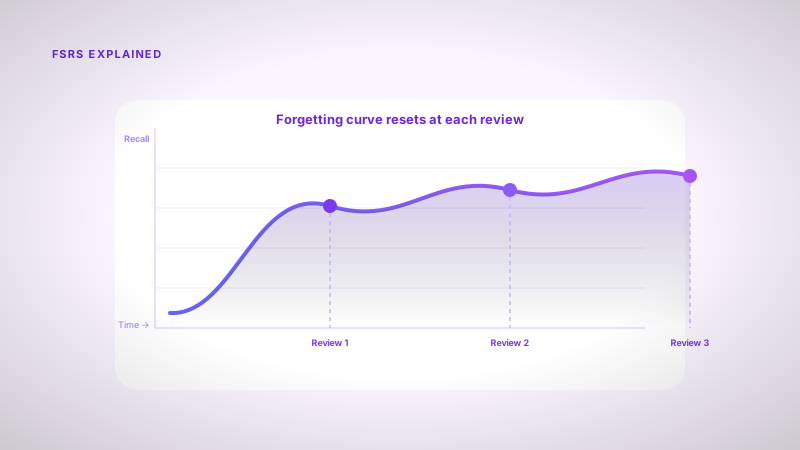
What Is FSRS Spaced Repetition? (Explained for Students)
FSRS explained plainly: how it differs from SM-2 and Quizlet Learn mode, and when it actually matters.
Read article →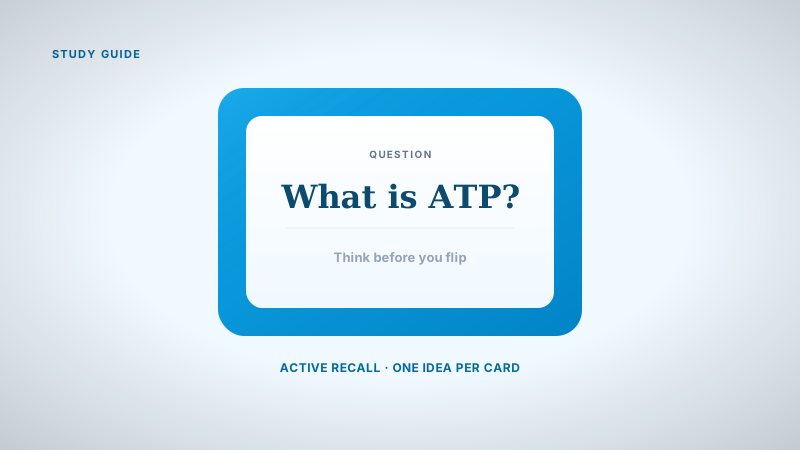
How to Use Flashcards Effectively (What Actually Worked in College)
Flashcard habits that work in engineering: one idea per card, tags, daily reviews, and what to fix when decks stop helping.
Read article →