What Is FSRS Spaced Repetition? (Explained for Students)
FSRS explained plainly: how it differs from SM-2 and Quizlet Learn mode, and when it actually matters.
Cramming got me through high school quizzes. It stopped working when university courses started stacking and last month's material still mattered on the next midterm.
Spaced repetition is the fix for scheduling. FSRS (Free Spaced Repetition Scheduler) is the algorithm I ended up using after trying Quizlet Learn mode and realizing it wasn't the same thing.
Tools: Nebulearn (I built this, FSRS is default), Anki (FSRS in settings), or algorithm comparison if you want SM-2 and Leitner too.
The forgetting curve, in plain terms
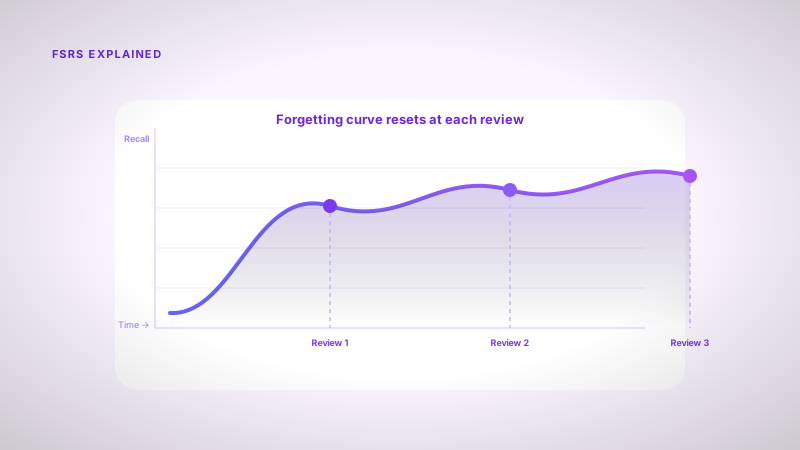
Your memory drops off on a curve. Review too early and you wasted time on something you still knew. Review too late and you're relearning from scratch.
Spaced repetition picks the review time in the middle: soon enough that you almost forgot, late enough that you didn't waste the session.
That's the whole idea. FSRS is just a modern way to calculate those intervals per card.
What FSRS actually does differently from SM-2
SM-2 (what classic Anki used for years) tracks an ease factor on each card. Every time you rate a card, that multiplier stretches or shrinks the next interval. Simple, battle-tested, but every card on the same schedule logic gets treated somewhat similarly over time.
FSRS tracks memory stability per card based on your actual review history. It estimates how long until you're likely to forget, and schedules the next review from that. You can also set a desired retention target (e.g. 90%): the algorithm tries to hit that rate, which means higher targets = more reviews but fewer lapses.
Practical difference for students:
| SM-2 | FSRS | |
|---|---|---|
| What it optimizes | Interval growth via ease factor | Predicted forgetting time per card |
| Efficiency | Good | Usually fewer reviews for same retention |
| Tuning | Ease factor drift can inflate intervals | Desired retention slider |
| Where you'll see it | Classic Anki default | Anki (optional), Nebulearn (default) |
You don't need to understand the math. You rate cards honestly. The scheduler handles the rest.
FSRS vs cramming
| Cramming | FSRS | |
|---|---|---|
| When you study | One or two blocks before the test | 10–20 min most days for weeks |
| What it optimizes | Recognition tomorrow | Recall weeks later |
| Cost | High stress, re-learn next unit | Low daily friction |
Research on distributed practice and the testing effect backs the general pattern: short retrieval sessions spread over time beat one long reread for long-term retention.
FSRS vs Quizlet Learn mode (and the game modes)
Quizlet is where I started. Learn mode, Match, Gravity. Useful before a Friday quiz.
The gap shows up in cumulative programs where last month's material still matters. Quizlet has leaned harder into game-style modes over the years. You can grind Match for an hour, feel productive, and still lose material when the next course references it.
Learn mode helps recognition before a test. FSRS schedules recall over weeks. Different jobs.
For why that pace matters in fast university courses, see the calc example in how to use flashcards effectively.
Nebulearn vs Quizlet · Quizlet alternatives
How to start (minimal version)
- Make cards from one lecture — not the whole textbook. PDF workflow.
- Review daily — even 15 minutes counts. Daily routine.
- Don't skip two weeks — the due pile will hurt. Consistency beats algorithm choice.
Low setup: Nebulearn — PDF upload, FSRS on free tier, no ads.
High control: Anki desktop — type cards, tune FSRS parameters, steep setup. Nebulearn vs Anki.
Pick one class. Run FSRS for a full exam cycle. You'll feel the difference on the next cumulative test, not after one session.