Frequency List Vocabulary: Which Words to Learn First in a New Language
A few thousand common words cover most of what you will read and hear. How word frequency coverage works, how to pick a list, how to card words with sentences, and when to stop following the list.
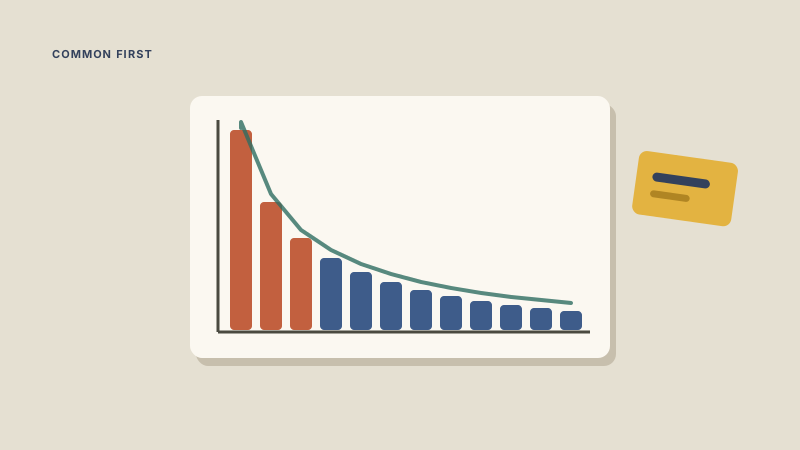
In every language, a small number of words make up most of what people say and write. The most common thousand or so word families typically cover around three quarters or more of everyday text, and a few thousand cover the large majority. So learning words in frequency order, the most common first, gets you understanding real language much faster than learning by theme or from a textbook's word lists. The method: pick a frequency list for your language, card each word with an example sentence, learn 10 to 20 a day, and as soon as possible start adding words from your own reading and listening instead.
(This guide is from the Nebulearn blog, and Nebulearn makes a flashcard app with text to speech for most languages.)
How coverage works
Vocabulary researchers, notably Paul Nation, measure how much of a text you know as coverage: the percentage of words in it that you recognize. Two findings matter most.
| Finding | What it means |
|---|---|
| Coverage rises fast at first, then slowly | The first 1,000 words give you far more coverage than words 9,001 to 10,000 |
| Comfortable reading needs high coverage | Research by Nation and others suggests around 95% coverage for adequate understanding and about 98% for comfortable reading without a dictionary |
| 98% coverage of written text takes a lot of words | Nation (2006) estimated around 8,000 to 9,000 word families for written English, and about 6,000 to 7,000 for spoken English |
Exact numbers depend on the language and the type of text, but the shape is the same everywhere. Early words are hugely valuable. Later words still matter, but each one adds less, and frequency lists become less useful once you are into the thousands.
| Range | Typical role |
|---|---|
| Top 100 to 300 | Function words: the, and, to, is, you, and their equivalents. Hard to card alone, best learned in sentences. |
| Top 1,000 | Core everyday vocabulary. Enough to follow simple conversations with effort. |
| Top 2,000 to 3,000 | Most of everyday speech and simple text. A common target for the first year. |
| 3,000 to 8,000+ | Needed for comfortable reading of adult text. Learn increasingly from reading itself. |
Choosing a list
| Source | Pros | Cons |
|---|---|---|
| Published frequency dictionaries (for example the Routledge Frequency Dictionary series) | Carefully built from large corpora, with example sentences | Paid, and not available for every language |
| Subtitle or corpus based lists | Reflect spoken, everyday language | Can include names and slang, need cleaning |
| Premade frequency decks | Fast to start, often include audio and sentences | Quality varies, check for errors |
| Your course's word list | Matches what you will be tested on | Not always frequency ordered |
Lists based on spoken or subtitle language are often the most useful early on, since they emphasize the words people actually say.
How to card each word
A bare word with a translation is the weakest card. Add context:
Front: el tiempo
Back: time, weather. "No tengo tiempo." (I don't have time.) "¿Qué tiempo hace?" (What's the weather like?)
| Card element | Why |
|---|---|
| The word in the target language on the front | Recognition first, which is what reading and listening need |
| Meaning on the back | Short, the most common sense first |
| One or two example sentences | Shows usage, gender, collocations, and multiple meanings |
| Audio | Pronunciation and listening recognition |
| Gender or article for nouns | Learn it with the word from the start. Memorizing noun gender covers how. |
For words you want to use actively, add a production card too (meaning to word), but start with recognition. Reverse flashcards explains why both directions are separate skills.
How many a day
| Daily new words | Time to reach 2,000 | Approximate daily review time at the peak |
|---|---|---|
| 10 | About 7 months | 15 to 20 minutes |
| 20 | About 3.5 months | 30 to 40 minutes |
| 30 | About 2.5 months | 45 to 60 minutes |
Review time grows with new cards, because each new card comes back several times in its first weeks. Pick a number you can sustain every day for months, not one you can manage for a week. New vs due cards explains the trade off, and maximum sustainable flashcard count helps estimate your limit.
When to stop following the list
Frequency lists are most useful for the first one to three thousand words. After that, switch gradually to mining words from what you actually read, watch and hear.
| Stage | Main source of new words |
|---|---|
| 0 to 1,000 words | Frequency list |
| 1,000 to 3,000 | Mostly frequency list, plus words from simple reading and listening |
| 3,000 and beyond | Mostly your own input, books, shows, podcasts, conversations |
Words you meet in your own input are more memorable, because you have context and a reason to know them, and you will meet them again. Words learned only from a list and never encountered can become "ghost words" that you review for months but never really own. Ghost words in spaced repetition covers how to spot and handle them.
Common mistakes
| Mistake | Fix |
|---|---|
| Cards with only a translation | Add a sentence and audio |
| Too many new words a day | Lower it until reviews are sustainable |
| Learning the list but not reading or listening | Spend at least as much time on input as on cards |
| Sticking to the list at 5,000 words | Switch to words from your own input |
| Skipping pronunciation | Add audio from the start |
Where other resources are better
Graded readers and comprehensible input, such as podcasts and videos made for learners, are where vocabulary turns into understanding. Language tutors and exchange partners give speaking practice. Many language courses also teach the high frequency words, just not in strict order.
Spaced repetition for language learning covers the broader method. In Nebulearn, you can set a deck's front and back languages so cards are read aloud with your device's text to speech, and FSRS schedules each word, so the ones you know stop taking time.
Common words first, then your own
A few thousand of the most frequent words cover most of everyday language, so learn them first, in frequency order. Card each with an example sentence and audio, learn function words through sentences, pick a daily number you can sustain for months, and from around 2,000 to 3,000 words, shift to learning words from your own reading and listening.