Nebulearn vs Quizlet: Which Is Better for Actually Remembering?
Nebulearn vs Quizlet: same-lecture workflow, games vs FSRS, ads, and when each app fits.
Most students already have a Quizlet account. I did too, all through high school. Match before a vocab test, someone drops a set link, you're studying in thirty seconds.
University is where I hit the wall. Cumulative courses, my prof's PDFs, material that had to stick past one quiz. Quizlet's Learn mode and Match felt like studying. They weren't scheduling what I actually forgot.
I work on Nebulearn now. This is my honest read on when Quizlet still wins and when it doesn't.
See also: Quizlet alternatives · What is FSRS
Side by side
| Nebulearn | Quizlet | |
|---|---|---|
| Free tier | 300 Qs, 20 AI/wk, no ads | Basic modes, ads |
| Paid | ~$40–66/yr | Plus ~$36/yr |
| AI from your PDF | Built for it | Limited |
| SRS | FSRS | Learn mode |
| Public library | Growing | Massive |
| Group study | Live shared folders | Static shared sets |
| Study feel | Review queue | Games + Learn mode |
Same lecture, two workflows
Imagine a 40-slide weekly PDF from a cumulative STEM class. Here's what each path actually looks like:
Quizlet path
- Find or build a set (10–60 min): Search for your course. Maybe someone's set matches. Often it doesn't, or it has wrong answers. Building manually means typing every term.
- Study with Learn / Match (20–40 min): Feels productive. Progress bars move. Match is genuinely fun.
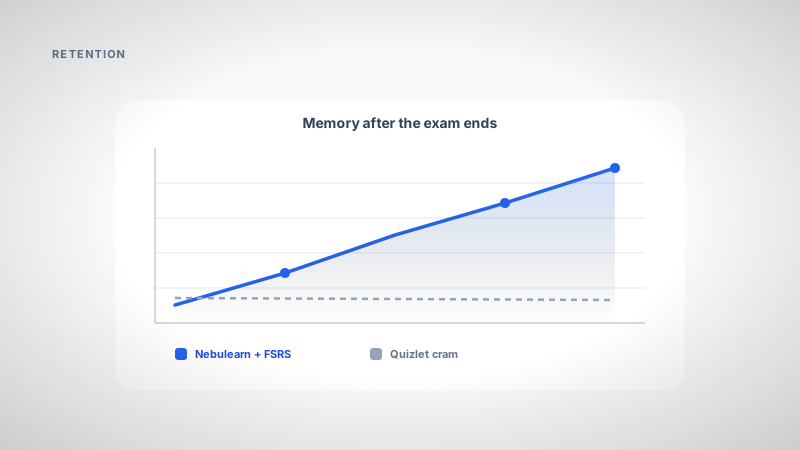
- Two weeks later: Recognition fades unless you've been re-running Learn mode. No per-card schedule based on what you forgot.
Best when: the set already exists, the quiz is soon, long-term retention isn't the goal.
Nebulearn path
- Upload PDF (~2 min): One week's slides, not the whole textbook.
- Edit draft cards (10–20 min): Split big cards, delete figure-caption junk, tag for the exam. PDF workflow.
- Daily FSRS queue (10–15 min/day): Cards you miss return tomorrow. Easy ones wait weeks.
- Two weeks later: Due cards resurface before you fully forgot. Built for courses that stack.
Best when: the material is from your prof, the class is cumulative, you care about the next midterm not just this quiz.
This isn't a benchmark with stopwatch precision. It's the workflow difference students actually hit.
What I ran into with Quizlet
Gamification over retention. Match, Gravity, Live, streaks. Engagement is high. Long-term scheduling is not FSRS.
Learn mode ≠ spaced repetition. Helps cram recognition. Doesn't model per-card forgetting the way FSRS does.
Ads on free. Interrupt review. Fine for ten minutes, annoying during midterm week.
Public sets are unreliable. Wrong answers, wrong prof, wrong year. "BIO130 midterm" might be from 2019.
Features moved behind Plus. Free still works for basics; power users hit paywalls.
You're often studying someone else's material. Great when it matches. Useless when your prof tests from slides nobody uploaded.
None of that makes Quizlet bad. It's built for a different job.
Where Quizlet still wins
Premade public sets in a pinch. Everyone has an account. Plus ~$36/yr is cheap if you want Quizlet without ads.
Night-before vocab quiz with a link in the group chat? Use Quizlet.
Where Nebulearn fits instead
Your PDF → edited deck → FSRS over the term. No ads on free. Shared folders when a study group edits one deck.
For why cumulative programs punish cram-and-forget, see how to use flashcards effectively.
Who should pick what
Quizlet: quick cram, elective vocab, premade sets, low-stakes quizzes.
Nebulearn: PDF classes, study groups, anything where next month's course assumes you remember this month.
Both: Quizlet for easy premade sets, FSRS app for hard cumulative courses. That's what I ended up doing before I built Nebulearn.
I work on Nebulearn.