How to Study With Spaced Repetition (Without Burning Out)
Practical spaced repetition study routine for students: daily reviews, FSRS, card quality, and tools that don't eat your whole evening.
Spaced repetition only works if you actually show up. The most advanced algorithm in the world cannot save you from doing zero reviews for three weeks.
Here is the routine that actually stuck for me in college without turning my life into a full-time flashcard job.
Tools that work well for this: Nebulearn (FSRS + PDF generation). Technique: how to use flashcards effectively. Algorithms: FSRS vs SM-2 vs Leitner. Alternatives: best Anki alternatives.
Step 1: Make cards from this week only
Do not upload and generate a deck for the entire textbook in week one. You will drown in cards you haven't even learned in class yet. Scope it to what's on the very next exam: one lecture, or one chapter.
Read the PDF workflow or the lecture notes workflow.
Step 2: Fix bad cards once
Ten minutes of edits on Monday beats an hour of reviewing vague, confusing questions all week. Keep it to one idea per card. Name the enzyme. Name the concept. If the AI generated a paragraph answer, delete it and write a concise bullet point.
Step 3: Review every day (keep it small)
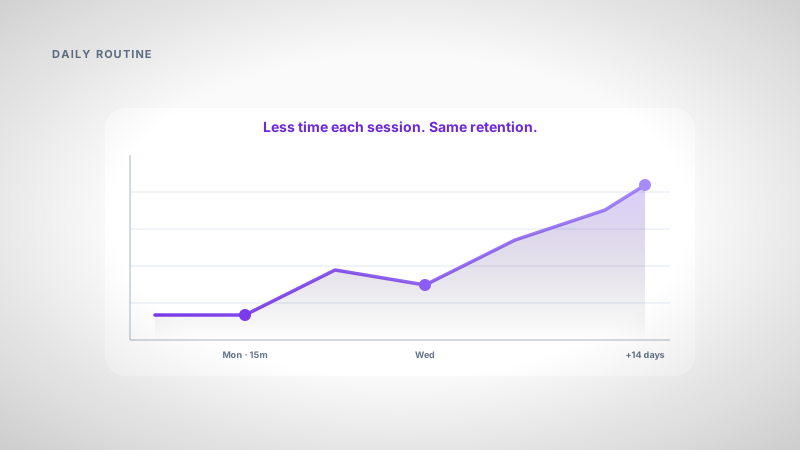
Fifteen minutes daily beats two hours of panic-reviewing on Sunday. I integrate reviews into downtime:
- After lunch on my phone
- While sitting on the bus
- Right before I pretend to sleep
The FSRS algorithm queues exactly what you need to see right before you forget it. Trust the math.
Step 4: Don't add 200 new cards before midterms
When you add new cards, your daily review pile increases. If you add 200 new cards the week of midterms while you're already drowning in reviews, you will burn out and quit the app entirely.
Cap your new cards during exam weeks. It is perfectly valid to enter survival mode and only review the critical stuff you already built. Quality over quantity.
Step 5: Study with your group on the same deck
If three people fix different weak spots in one shared folder, everyone's deck improves exponentially. You get the benefit of collective brainpower without losing your individual FSRS schedule. Read the Group study guide.
What absolutely not to do
- Generate cards and never review them. Making the deck is not studying. Reviewing is studying.
- Skip a week then blame the app. Spaced repetition requires consistency. If you skip a week, the algorithm assumes you forgot, and your review pile will explode.
- Copy bold text without understanding. If you don't understand the concept, a flashcard won't teach it to you.
- Switch apps instead of fixing cards. A bad flashcard is a bad flashcard, whether it's in Quizlet, Knowt, or Anki. Fix the card, don't just migrate to a new app.
The weekly rhythm that actually worked for me
| Day | Task |
|---|---|
| Mon | Upload the new lecture PDF, clean the draft deck |
| Tue–Sun | 15 minutes of FSRS review daily (on the bus, etc.) |
| Before exam | One extra focused pass on the tagged exam folder only |
Spaced repetition is boring right up until the exam, when material from six weeks ago is still there.
Start small. One class. Fifteen minutes daily. Nebulearn's free tier is enough to test if the habit sticks — or use Anki if you prefer typing cards and tuning everything yourself.