What Is Spaced Repetition? (It's a Due List, Not Flashcards)
Spaced repetition is a due list between sittings, not doing flashcards. How it differs from active recall and Quizlet Learn, without the Wikipedia history dump.
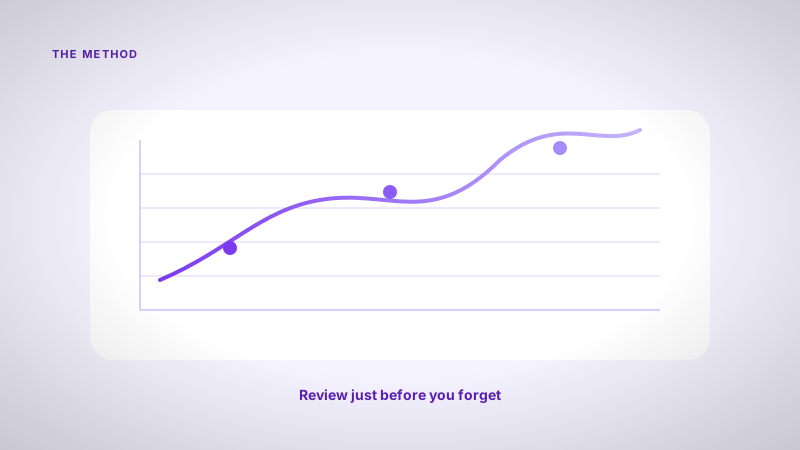
Spaced repetition is a schedule. You see a fact again around the time you would have lost it. Get it right and the next gap gets longer. Miss it and it comes back tomorrow, or later today. What you open in the morning is a due list: the cards that are due, plus any new ones you decided to add. Not the whole deck.
Doing flashcards in one sitting is practice. Spaced repetition is the list that shows up between sittings.
I mixed those up for a couple of years. I'm Daniel, third-year engineering science at UofT (machine intelligence). I built Nebulearn, so treat anything I say about apps as a conflict of interest. I also spent high school on Quizlet and first year thinking "I did my cards" meant I was doing the method. I was doing the sitting. The set I had already "finished" didn't have a next date.
The daily habit is how to study with spaced repetition. The algorithm I actually use is FSRS. This page is just what the thing is.
What I thought it was
I thought spaced repetition meant owning flashcards. Make a set, flip it the night before a quiz, feel fine, move on. That worked in high school. First year at UofT, courses started stacking. Unit 4 assumed unit 2. I would "finish" a Quizlet set, score okay on Friday, and then relearn half of it in March.
The sitting was never the method. After you close the app, each item already has a next date. Tomorrow you open that queue. You don't pick a folder and run the whole thing again.
You can do this on paper. A calendar that says "redo problem set 3 in ten days" is spaced repetition. Flashcards are just an easy way to attach a date to a lot of small items at once.
Memory fades. You already knew that.
Lecture tonight, you can still say the definition. Next week it's fuzzy. By the midterm you're relearning it and calling that review.
If you restudy while it's still easy, you wasted the sitting. If you wait until it's gone, you paid for the lecture twice. Spacing is the annoying in-between: late enough that you have to think, early enough that you're not starting from zero.
You don't need Ebbinghaus percentages for this. Study-TikTok loves those graphs. A lot of the numbers are made up or copied from other posts that also didn't check. What you need is a queue that puts the right card in front of you tomorrow instead of every card every night.
Calc was the class that made this real for me. We burned a year of high school content in a few months, and the next course assumed you still had it. Cramming one quiz and dropping the unit doesn't survive that pace. If you want the cram-vs-schedule split, I wrote that comparison separately.
How you study vs when you study
People glue these together because a flashcard can do both in one tap.
Active recall is how you spend the sitting. You try to produce the answer before you look. That is the opposite of rereading the slide.
Spaced repetition is when that item comes back.
You can quiz yourself on chapter 4 for three hours tonight and never see it again until the exam. That's active recall with no spacing. You can also space without cards. The problem-set calendar still counts.
I learned the difference on a materials exam. About 150 cards, stayed up flipping them, felt okay. On the test I could almost remember the definitions and couldn't write them cleanly. I'd been recognizing, not recalling. A better schedule wouldn't have saved those reviews, because the reviews weren't recall. How I use flashcards now.
The due list is the whole feature
A real scheduler keeps state per card across days: how you rated it, and the next date.
You open the app and you get the due cards, plus new ones only if you chose to add them. Rate one Good and it can disappear for days. Rate it Again and it's back tomorrow. After a few weeks the pile of "I still need this" is small. It isn't every card you've ever made.
That next-review date is the product. Themes, games, and streaks are not.
| Session practice (Quizlet Learn, most "adaptive" modes) | Spaced repetition (Anki, FSRS apps) | |
|---|---|---|
| What it tracks | How you did in this sitting | How you did across days |
| What you see tomorrow | Whatever set you choose to reopen | A due list the app already computed |
| Easy cards | Keep showing up if you run the set again | Wait |
| Missed cards | Come back in the same session | Come back on a future day |
If the app never says "these 11 cards are due today, the rest can wait," you are practicing. Quizlet Learn can be excellent practice. I used it through high school. It is a different machine.
Things that get called spaced repetition and are not
A 1-3-7-14 calendar you copied from a study blog. That is one rigid schedule for every item. Real spacing is per card. The hard ones come back sooner than the ones you already know.
Rereading notes every Sunday. That is spaced rereading. The gap is there. The recall usually is not.
Running the same Quizlet set whenever you remember. You are choosing the pile. The app is not holding a due date while you are in lab.
An algorithm name on a settings page you never open. SM-2 and FSRS only matter if the queue you see tomorrow was computed from your ratings. Otherwise you bought a logo.
Algorithms, then I am going to stop
Leitner is boxes. Right: move forward. Wrong: move back. You can explain it in thirty seconds, including with paper.
SM-2 is what classic Anki used for years. Each card has an ease factor. Ratings stretch or shrink the next gap.
FSRS is the one I want students on. It estimates how long this card will last in your memory and aims at a retention target. That is as far as this page goes. What is FSRS is the student version. FSRS vs SM-2 vs Leitner has the table.
You don't pick an algorithm to feel serious. You pick one so the daily queue doesn't explode. I ship all three in Nebulearn because I got tired of pretending there is one personality type.
What it will not do
It will not save skipped weeks. Miss two weeks and you get a backlog. That is the system being honest. The routine is about keeping the pile small enough that you still open the app.
It will not fix a bad card. "Explain photosynthesis" is not a flashcard. One idea, one answer. How I write cards.
It will not replace understanding. Spacing maintains memories you already formed. If you never understood the lecture, you are scheduling confusion.
When it actually shows up
Not after one night. Cramming wins the next quiz. Spacing shows up on the cumulative test, or the next unit that assumed you still had this one.
Give it two to three weeks of daily reviews on this course. Not a 2,000-card dump of the whole textbook in week one. Scope is the difference between a 15-minute queue and a second job.
Tools, briefly
Anki if you want maximum control and you will do the setup. FSRS lives in settings.
Nebulearn if the material is a PDF and you want FSRS on without that setup. I built it. Conflict of interest, then the time comparison if you want me to argue it on hours instead of vibes.
Paper Leitner boxes if you hate apps. The method is older than the App Store.